For those with fine or thin hair, the word “oil” can trigger a specific fear: the dreaded, flat, greasy look. The thought of weighing down delicate strands often leads to avoiding these products altogether.
This means missing out on transformative benefits.
However, the issue is rarely oil itself, but the type of oil and, crucially, its overall formulation. Modern, intelligent lightweight hair oil formulations are engineered to deliver shine, fight frizz, and protect—all without sacrificing volume.
The key isn’t to skip the step, but to crack the code to the right product.
Why Formulation is Everything for Fine Hair
Fine and thin hair has unique structural needs. Each strand has a smaller diameter and a thinner protective cuticle layer.
This makes it more susceptible to breakage and faster to appear overloaded.
A heavy, occlusive oil acts like a thick blanket, collapsing hair at the root. The ideal hair oil for fine hair functions differently.
It should be a blend of fast-absorbing ingredients that smooth the cuticle and seal in moisture without a greasy residue.
The goal is moisture without weight, achieved through precise chemistry.

The Hero in the Blend: Why Ingredients Like Argan Oil Shine
Superior lightweight oils often feature ingredients like Argan Oil as star components. Dubbed “liquid gold,” it’s rich in vitamin E and essential fatty acids.
In a well-designed hair oil product, argan oil is strategically integrated. It absorbs relatively quickly, providing brilliant, non-greasy shine and taming frizz by smoothing the hair cuticle.
This showcases how a potent natural ingredient can be the cornerstone of a high-performance modern hair care product, delivering targeted frizz control and shine enhancement.
Reading the Blueprint: Decoding the Label
A great product is more than its hero ingredient. It’s about the synergistic blend. When evaluating a styling product for fine hair, the ingredient list is your blueprint.
- Lightweight Carriers: After key ingredients like argan oil, look for other fine-hair-friendly players such as grapeseed oil or jojoba oil. These absorb rapidly.
- The Silicone Strategy: Don’t automatically fear silicones like cyclopentasiloxane. In professional lightweight hair serums, they are often used in volatile forms to provide slip and fight humidity – with minimal weight.
- Red Flags: Be cautious of formulas led by heavy butters (shea, cocoa) or dense oils like pure coconut oil. These are more likely to cause buildup and limpness.

The Non-Negotiable Rules for Application
The most perfectly formulated oil can fail if applied incorrectly. The mantra is: “Less is more, and ends are king.”
The Steps:
- Start Minimal: Begin with a pea-sized amount.
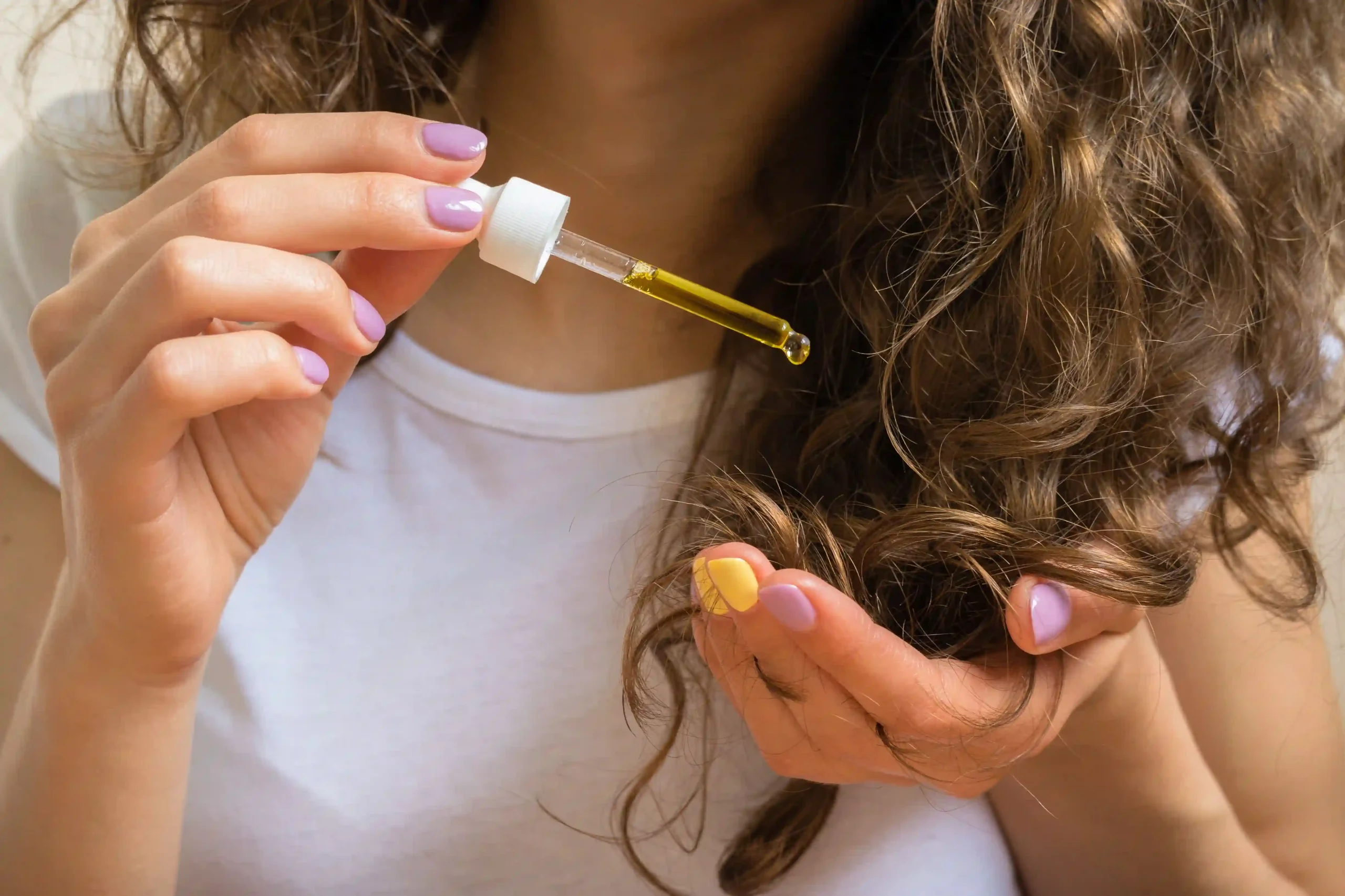
- Emulsify: Warm it between your palms.
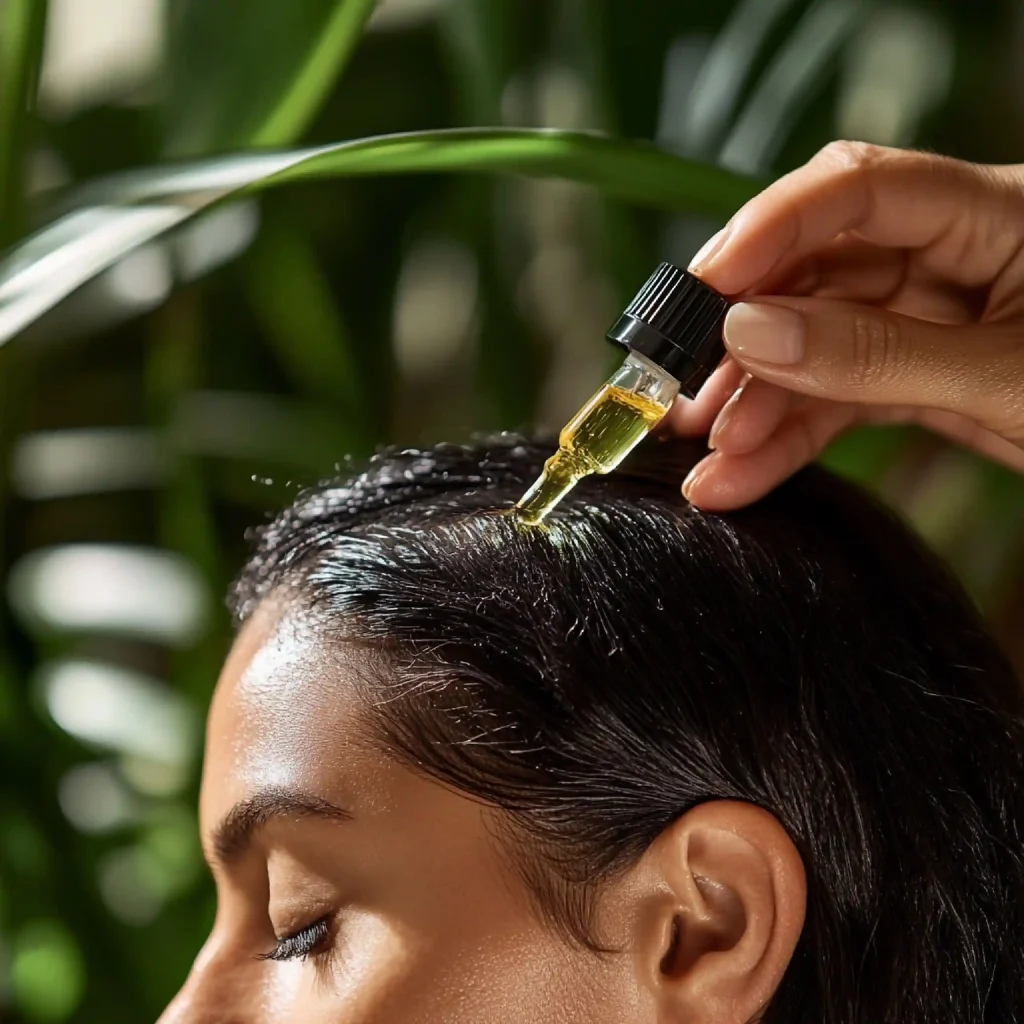
- Target with Precision: Apply only to the mid-lengths and ends. Avoid the roots to maintain volume and scalp balance.
- Ideal Timing: Use on damp, towel-dried hair to seal in moisture.

Final Takeaway
Selecting a lightweight hair oil is about informed choice. Seek sophisticated formulations with smart blends, and apply with strategic precision.
The right product becomes a partnership – enhancing shine and manageability while respecting the delicate nature of fine hair. It proves that the right oil doesn’t weigh hair down; it lifts its potential.