


What Startup Brands Should Know Before Choosing a Supplier

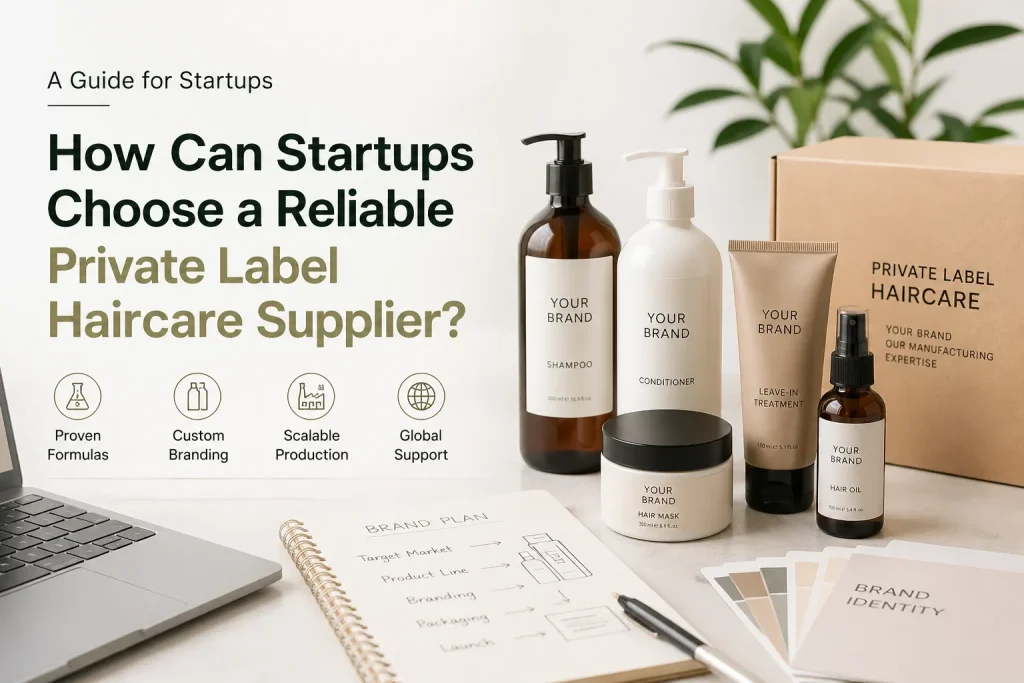
A practical guide for startups on how to choose a reliable private label haircare supplier to launch and scale a haircare brand with ready-to-market products and branding support.
a post about how startups choose a reliable private label haircare supplier

Launching a haircare brand today is more accessible than ever. You don’t need a factory, a full research lab, or years of formulation development to enter the market.

But what determines whether a startup brand succeeds or fails is not the idea itself—it is the supplier you choose.

For most new brands, private label manufacturing is the fastest and most practical way to turn an idea into a real product line.

Why Startup Haircare Brands Start with Private Label

For early-stage brands, speed and risk control are everything.

Private label allows you to:

  • Launch products quickly without long development cycles
  • Avoid heavy R&D and formulation investment
  • Use pre-tested, market-ready formulas
  • Focus resources on branding and marketing
  • Test product-market fit with lower risk

Instead of building from zero, you start from what already works—and build your brand on top of it.

What You Are Really Choosing When You Select a Supplier

Many startups think they are only choosing a manufacturer.

In reality, you are choosing the foundation of your brand execution.

Your supplier directly impacts:

  • Product consistency in the market
  • Customer satisfaction and repeat purchase
  • Brand positioning and perceived quality
  • Scalability when your sales grow
  • Speed of product launches in the future

A good supplier is not just a production source—it is a long-term operational partner.

What Can Be Customized in Private Label Haircare

Private label is not about rebuilding formulas. It is about adapting a proven product into your own brand identity.

Typical customization includes:

1. Packaging & Brand Identity

This is the most visible part of your brand:

  • Bottle and container selection
  • Label design and brand placement
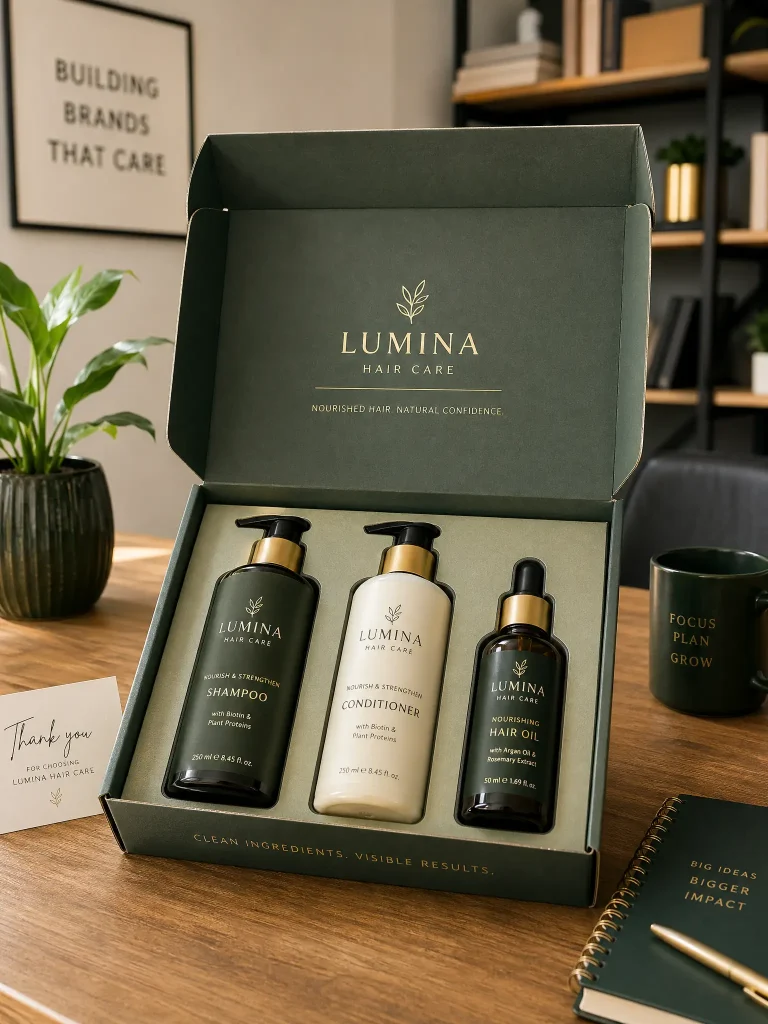
  • Packaging box and retail presentation
  • Visual style alignment with your market positioning

This is what your customers see first—and what defines brand perception.
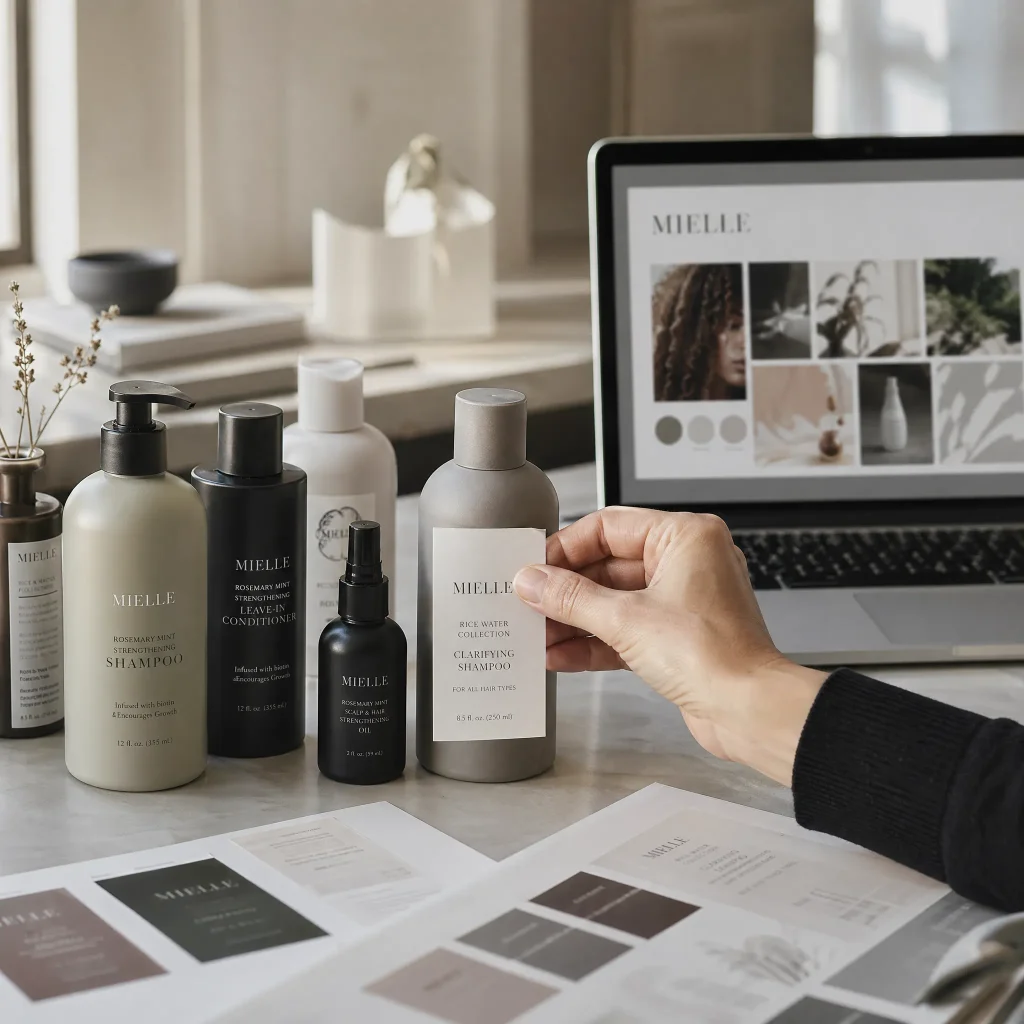
Haircare bottles on a desk in front of a laptop showing a color swatch grid, with a person’s hands holding a card nearby.

2. Fragrance & Sensory Experience

Haircare is highly sensory-driven. Small changes in fragrance can significantly affect customer perception:

  • Fresh salon-style scent
  • Light cosmetic fragrance
  • Neutral or sensitive-skin-friendly options

The goal is to match the expectations of your target market.

3. Product Positioning

The same formula can be positioned differently depending on your brand strategy:

  • Professional salon-use products
  • Retail and e-commerce consumer products
  • Repair-focused haircare lines
  • Daily maintenance and care systems

Positioning defines how the product is marketed, not just how it is made.

4. Product Line Structure

Most startup brands grow beyond a single product.

Common expansions include:

  • Shampoo and conditioner systems
  • Hair masks and treatments
  • Leave-in care and styling products
  • Complete care routines and bundles

Building a system increases customer retention and lifetime value.

What Startup Brands Should Look for in a Supplier

Choosing the right supplier is one of the most important early decisions.

A reliable partner should offer:

Stable Product Quality

Consistency is critical. Your customers expect the same result every time.

Market-Proven Formulas

Startups should avoid unnecessary formulation risk. Working with tested products reduces uncertainty and accelerates launch.

Flexible Branding Support

A good supplier should support:

  • Fast packaging adaptation
  • Small to scalable order quantities
  • Multiple product variations under one brand structure

Scalability for Growth

Your first order is only the beginning.

A strong supplier should be able to support:

  • Increasing production volume
  • Expanding product categories
  • Entering new markets and regions

Common Mistakes Startup Brands Make

Many new brands struggle not because of demand—but because of early supplier decisions.

Typical mistakes include:

  • Choosing based only on price
  • Overcomplicating product development at the beginning
  • Ignoring packaging and brand positioning
  • Skipping product testing before launch
  • Underestimating the importance of consistency

In haircare, trust is built through repetition and experience—not just marketing.

How Private Label Reduces Startup Risk

Private label manufacturing gives startups a structured way to enter the market:

  • Lower upfront investment
  • Faster product launch cycles
  • Reduced development uncertainty
  • Easier market testing and iteration
  • Scalable growth path after validation

Instead of guessing what might work, you start with what is already proven in the market.

Final Perspective

For startup haircare brands, success is not about creating everything from scratch.

It is about making the right foundational decisions early:

  • Choosing a reliable manufacturing partner
  • Starting with stable, proven products
  • Building strong branding on top of existing formulas
  • Scaling based on real market feedback

Private label manufacturing is not just a production method—it is a practical business model for entering and growing in the haircare industry efficiently.
Final Perspective

For startup haircare brands, success is not about creating everything from scratch.

It is about making the right foundational decisions early:

  • Choosing a reliable manufacturing partner
  • Starting with stable, proven products
  • Building strong branding on top of existing formulas
  • Scaling based on real market feedback

Private label manufacturing is not just a production method—it is a practical business model for entering and growing in the haircare industry efficiently.

Ready to turn your vision into a market-ready brand?

Skip the complexity of initial development. Use our market-proven, professional formulas to bring your products to life without the high investment risk.


In This Article
Recommended Reading
A woman in a salon with coppery hair showing uneven color fading and brassy tones, illustrating how keratin treatments can shift or lift existing hair dye.

Keratin treatment can affect dyed hair color, causing fading, yellow tones, or slight darkening. Learn how to prevent color change and keep your hair looking fresh.

Rear view of a woman brushing tangled hair with a wooden comb, illustrating hair loss and breakage concerns.

Discover professional secrets to preventing hair damage. From scalp health to thermal shielding, get the roadmap to restoring stronger, smoother, and shinier hair.

Woman with fine curly hair applying a drop of yellow hair oil from a glass dropper to her ends.

Discover how to choose a lightweight hair oil for fine hair. Learn key ingredients for non-greasy shine and the application secrets for volume.