Why Does Dyed Hair Fade Faster After Keratin Treatment?
One of the biggest concerns is color fading. Many users notice that their dyed hair looks lighter after a keratin treatment.
This happens mainly because of the preparation step. Most keratin treatments require a clarifying shampoo before application. This deep cleansing removes buildup, but it can also strip away some artificial color pigments, especially if the hair was freshly dyed.
Heat is another factor. The high temperature used to seal keratin can break down dye molecules inside the hair shaft. As a result, the color may appear less intense or slightly washed out.
This effect is more noticeable on semi-permanent and fashion colors, which are less stable than permanent dyes.
Why Does Blonde or Highlighted Hair Turn Yellow After Keratin?
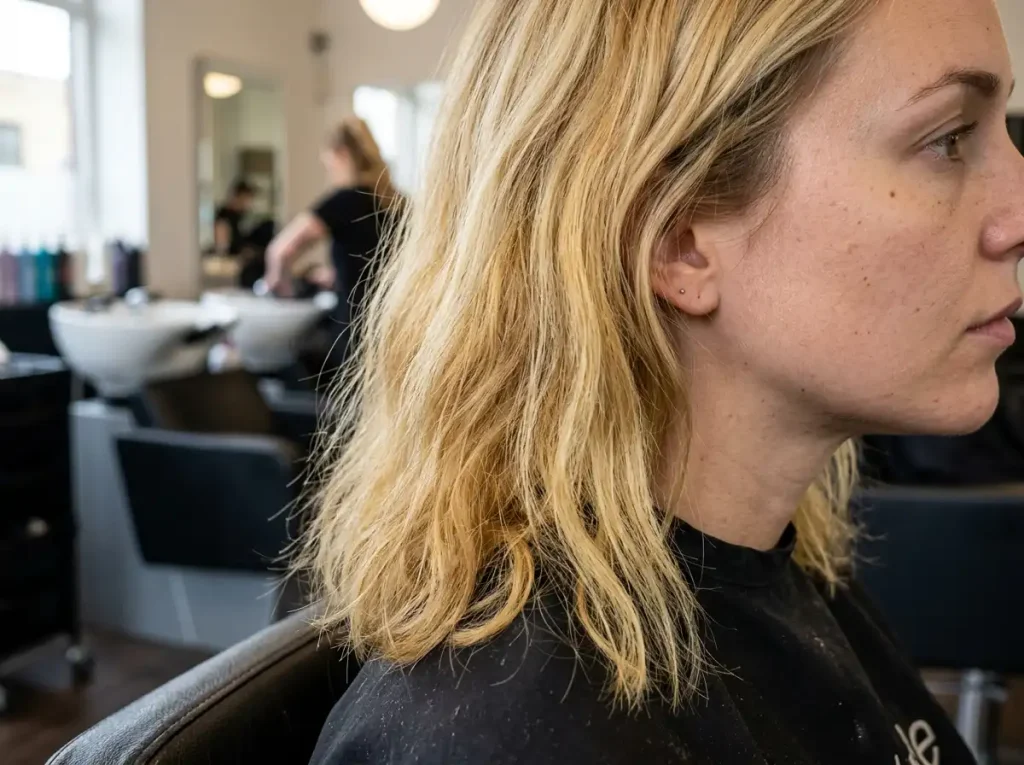
Yellowing or brassiness is a common issue, especially for blonde, bleached, or highlighted hair.
Keratin treatments often involve high heat, which can oxidize the hair surface. This oxidation process brings out warm undertones, leading to yellow or brassy shades.
In addition, some keratin formulas may contain ingredients that slightly alter how light reflects on the hair. On darker hair, this is less visible. On blonde or light-colored hair, even a small shift becomes obvious.
Environmental factors also play a role. After treatment, the hair may absorb minerals from water or pollutants more easily, which can contribute to discoloration over time.
Does Keratin Treatment Darken Dyed Hair Color?
Some users report that their hair looks darker immediately after a keratin treatment.
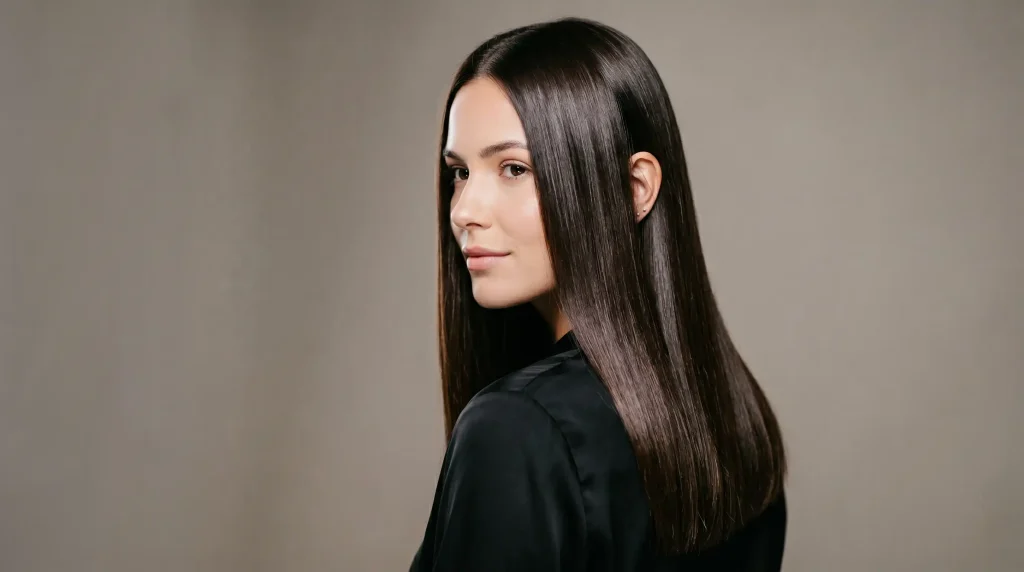
This is usually a temporary effect. The keratin coating smooths the cuticle, making the hair surface more uniform. This increases light reflection in a way that can make the color appear deeper or richer.
In some cases, residue from the treatment may sit on the hair, creating a slightly darker tone. Once the hair is washed a few times, this effect usually fades, and the true color becomes visible again.
So while keratin does not permanently darken hair, it can temporarily change how the color is perceived.
Why Does Red or Fashion Color Lose Vibrancy After Keratin?
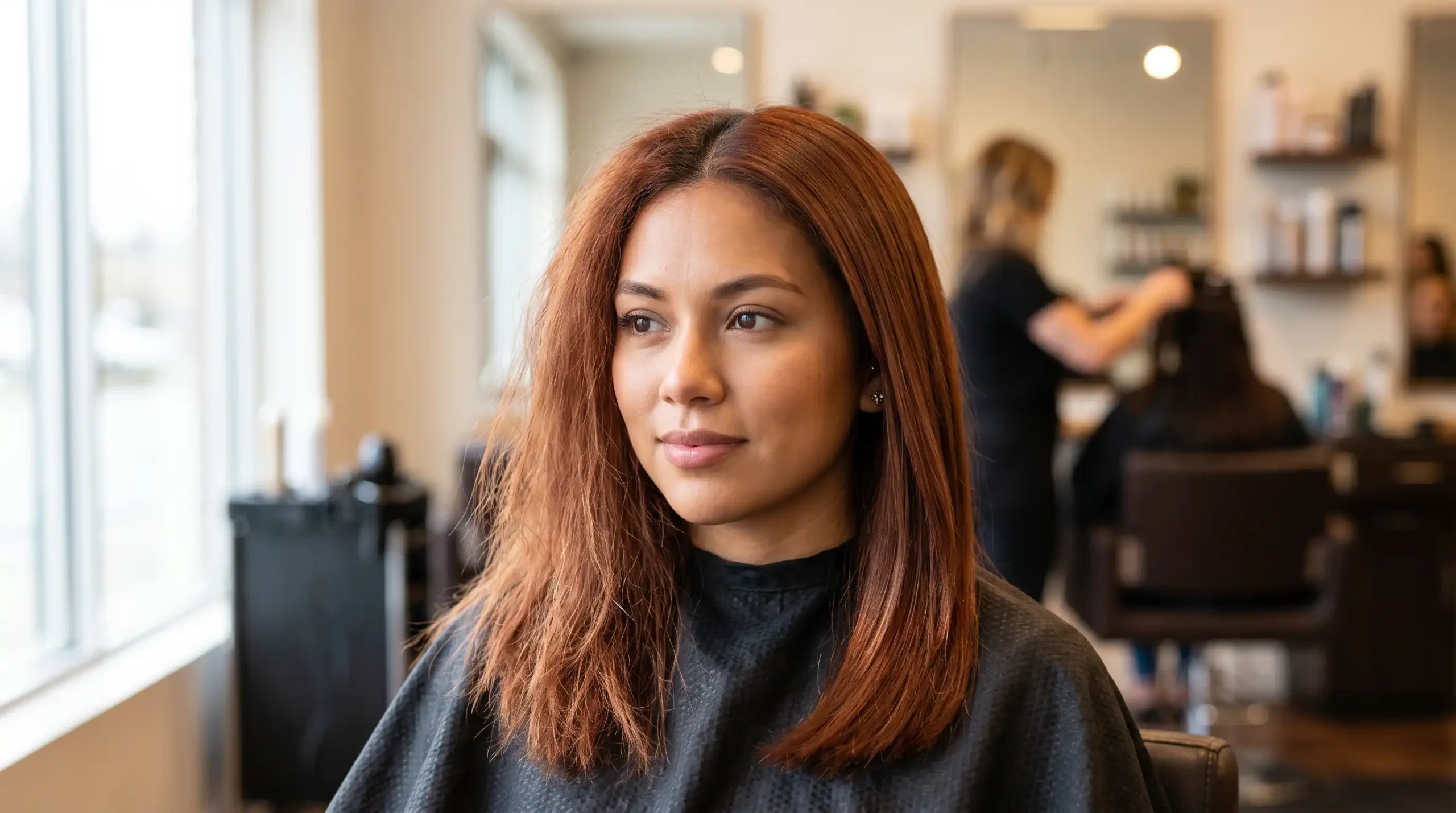
Red, copper, and other fashion shades are especially sensitive to keratin treatments.
These colors use larger or less stable dye molecules. Heat and deep cleansing can break them down quickly. As a result, the hair may lose its vibrancy and appear dull or uneven.
Another issue is color shift. Red tones may fade into orange, while cooler shades may lose their depth. This is not caused by keratin itself, but by the combination of heat, pH changes, and pigment instability.
For clients with vivid colors, timing becomes critical. Doing a keratin treatment too soon after coloring can significantly reduce color longevity.
Does Keratin Treatment Cause Uneven Color Results?
Uneven color after keratin treatment is another common complaint.
This usually happens when the hair has different levels of porosity. Damaged areas absorb more product and heat, while healthier sections react differently. As a result, color can fade unevenly across the hair.
If the hair was previously highlighted, bleached, or chemically treated, these variations become more pronounced. The keratin process can amplify these differences instead of smoothing them visually.
Proper sectioning, controlled heat, and even product distribution are essential to reduce this risk.
How Does Hair Porosity Affect Color Change After Keratin?
Porosity plays a key role in how dyed hair reacts to keratin treatments.
Highly porous hair absorbs both color and keratin more quickly, but it also loses them faster. During the treatment, these areas are more exposed to heat and chemical changes, which can lead to faster fading or tone shifts.
Low-porosity hair, on the other hand, may resist both color loss and keratin absorption. This can create inconsistency in the final result.
Understanding porosity allows for better customization of the treatment process, especially for color-treated hair.
Can You Prevent Color Fading When Doing Keratin on Dyed Hair?
Yes, color fading can be minimized with the right approach.
Timing is the first factor. It is generally recommended to perform keratin treatment before coloring, not after. If the hair is already dyed, waiting at least 1–2 weeks helps the color stabilize.
Choosing the right formula is also critical. Some keratin treatments are specifically designed for color-treated hair and are less likely to affect pigment.
Heat control is another key element. Using the lowest effective temperature reduces damage to dye molecules while still sealing the keratin.
Aftercare matters as well. Sulfate-free shampoos, color-protecting products, and limited heat styling all help maintain color longer.
What Are the Best Aftercare Methods to Protect Hair Color Post-Keratin?
Maintaining color after keratin treatment requires a targeted routine.
Use gentle, sulfate-free shampoos to prevent further color stripping. Avoid frequent washing, as this accelerates fading.
For blonde or highlighted hair, purple or blue shampoos can help neutralize unwanted yellow tones. For darker shades, color-depositing conditioners can refresh pigment between salon visits.
Hydration is also important. Well-moisturized hair holds color better and reflects light more evenly.
In addition, reducing exposure to chlorine, saltwater, and UV rays can help preserve both keratin and color.
Does Keratin Treatment Damage Hair Color Permanently?
Keratin treatment does not permanently damage hair color, but it can alter it.
Most changes—such as fading, slight yellowing, or temporary darkening—are reversible or manageable with proper care. However, repeated treatments without adjusting the process may lead to cumulative color loss.
The key is not to avoid keratin treatments, but to adapt them for color-treated hair. This includes choosing the right product, controlling heat, and following a proper maintenance routine.
Final Insight: Should You Do Keratin Treatment on Dyed Hair?
Keratin treatments and dyed hair can work together, but they require careful planning.
If smoothness and frizz control are the main goals, keratin treatment can greatly improve hair texture. However, there may be some trade-offs in color intensity or tone, especially for lighter or more vibrant shades.
For best results, consider doing keratin treatment before coloring, or use a system designed specifically for color-treated hair.
From a professional perspective, this also highlights a clear opportunity: developing keratin systems that protect color while delivering smoothing benefits can meet a strong and growing demand in the market.