When developing a private label hair care product, the ingredient list is more than a collection of technical terms printed on the packaging. It is an essential part of product identification, regulatory compliance, and brand transparency.
You may have come across the term INCI when reviewing shampoo formulas, conditioner specifications, cosmetic labels, or product documentation. But what exactly does INCI mean, why is it important, and how should hair care brands use it?
This guide explains the INCI naming system, its role in cosmetic labeling, and what private label brands need to know when preparing product ingredient lists.
INCI stands for International Nomenclature of Cosmetic Ingredients. It is an internationally recognized system for naming cosmetic ingredients in a standardized way.
Instead of using different commercial or local names for the same ingredient, INCI provides standardized ingredient names that can be used across cosmetic product labels and technical documentation.
For example:
INCI names help manufacturers, brands, regulatory professionals, and consumers identify cosmetic ingredients more consistently, even when products are marketed in different countries.
It is important to understand that INCI is a naming system, not a formula standard or a certification. Having an INCI name does not automatically mean that an ingredient or finished product has been approved for use in every market.
INCI plays an important role throughout the development, manufacturing, and labeling of hair care products.
Hair care formulas may contain dozens of ingredients, including cleansing agents, conditioning agents, humectants, emollients, preservatives, and functional additives.
Standardized INCI names help avoid confusion caused by different supplier names or regional terminology.
For example, a shampoo may contain Cocamidopropyl Betaine as a cleansing and foam-supporting ingredient. Regardless of the supplier’s commercial name for its raw material, the appropriate INCI designation helps maintain consistency in the finished product’s ingredient declaration.
INCI names are commonly used to prepare the ingredient lists printed on cosmetic packaging.
For private label brands, this is particularly important because the ingredient list must accurately reflect the actual finished product formula.
An ingredient list should not simply be copied from another product or selected based on marketing preferences. It must be prepared using the verified formulation and applicable labeling requirements.
Different markets have different cosmetic regulations and labeling requirements.
Standardized ingredient names help brands and manufacturers prepare documentation and ingredient declarations for international markets.
However, using INCI names alone does not guarantee regulatory compliance. Brands must also consider ingredient restrictions, concentration limits, declaration order, local naming requirements, and other applicable labeling rules.
Understanding frequently used INCI names makes it easier for brand owners to review formulas and communicate with manufacturers.
Below are examples of ingredients commonly found in hair care formulations.
| Common Ingredient Name | INCI Name | Typical Function |
|---|---|---|
| Water | Aqua | Solvent |
| Glycerin | Glycerin | Humectant |
| Hydrolyzed Keratin | Hydrolyzed Keratin | Hair conditioning |
| Vitamin B5 | Panthenol | Hair conditioning |
| Arginine | Arginine | Conditioning |
| Cocamidopropyl Betaine | Cocamidopropyl Betaine | Surfactant |
| Hyaluronic Acid Salt | Sodium Hyaluronate | Humectant |
| Argan Oil | Argania Spinosa Kernel Oil | Emollient |
| Citric Acid | Citric Acid | pH adjuster |
| Phenoxyethanol | Phenoxyethanol | Preservative |
The actual functions and permitted uses of individual ingredients depend on their formulation context and applicable regulations.
A hydrating shampoo may contain cleansing agents, moisturizing ingredients, conditioning agents, and preservatives.
An illustrative ingredient declaration might look like this:
INGREDIENTS:
Aqua, Sodium Laureth Sulfate, Cocamidopropyl Betaine, Glycerin, Sodium Chloride, Panthenol, Hydrolyzed Keratin, Citric Acid, Phenoxyethanol.
This is a simplified example, not a complete or verified commercial formula. A real ingredient list must reflect the actual formulation, including all relevant ingredients and their correct declaration order.
When reviewing cosmetic formulas and raw material documentation, you may encounter several different names for the same ingredient.
These terms serve different purposes and should not be used interchangeably.
| Term | Purpose | Example |
|---|---|---|
| INCI Name | Standardized cosmetic ingredient identification | Glycerin |
| CAS Number | Chemical substance identification and database reference | 56-81-5 |
| Chemical Name | Describes a substance’s chemical identity or structure | Propane-1,2,3-triol |
| Trade Name | Commercial name assigned by a raw material supplier | Supplier-specific product name |
For example, Glycerin is the INCI name, 56-81-5 is its CAS Number, and Propane-1,2,3-triol is its systematic chemical name.
A raw material supplier may also sell it under a particular commercial product name.
For private label brands, the most important distinction is that the trade name of a raw material is not necessarily the name that should appear on the finished cosmetic product label.
The correct ingredient declaration must be determined using the actual raw material composition and applicable INCI naming requirements.
For private label hair care projects, preparing an accurate ingredient list involves more than translating raw material names into English.
It requires coordination between formulation development, raw material documentation, product specifications, and packaging design.
A typical workflow includes the following steps.
The manufacturer reviews the final approved formula and confirms all ingredients used in the product.
This includes base ingredients, functional additives, preservatives, fragrances, and other formulation components.
Each raw material is checked against its appropriate cosmetic ingredient designation.
For raw materials containing multiple components, such as certain commercial blends, the individual ingredients may need to be declared separately according to their composition and applicable requirements.
In many major cosmetic markets, ingredients are listed in descending order of concentration, subject to specific exceptions.
For example, under EU cosmetic labeling rules, ingredients present at concentrations below 1% may be listed in any order after those present at concentrations of more than 1%.
Other markets may have different requirements, so the target market must be considered before finalizing the ingredient list.
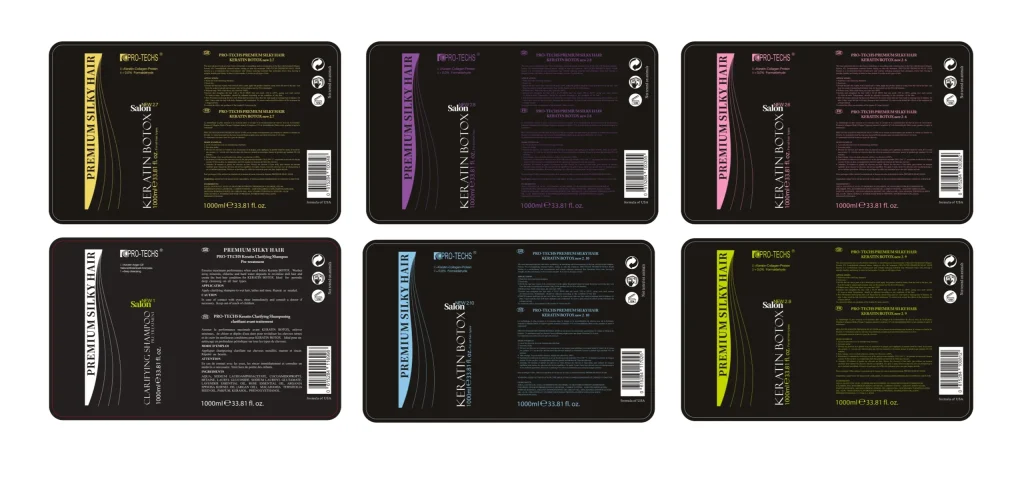
The verified INCI names are incorporated into the product label design.
The ingredient list should be checked alongside other required label information, such as product identity, net contents, manufacturer or responsible person details, and applicable warnings.
Before commercial distribution, the finished label should be reviewed against the regulations of the intended sales market.
For example, the EU Cosmetics Regulation (EC) No 1223/2009 and the US Federal Food, Drug, and Cosmetic Act have different regulatory frameworks and labeling requirements.
A compliant INCI list is one important part of a compliant cosmetic label, not a substitute for a complete regulatory review.
When working with a private label hair care manufacturer, brands should confirm what formula and product documentation will be provided during the project.
Depending on the product and target market, useful documents may include:
Not every document serves the same purpose. For example, an INCI ingredient list is intended for ingredient declaration, while a full formula contains more detailed formulation information that may be commercially confidential.
Before starting a project, brands should clarify which documents are included and whether additional market-specific regulatory support is required.

Choosing a hair care formula is only one part of launching a private label product. Accurate ingredient identification, appropriate labeling, and market-specific compliance preparation are equally important.
At PRO-TECHS, we support private label hair care projects from formula selection and product development to packaging and branding. Our team helps clients prepare product-related documentation and coordinate ingredient information for packaging requirements.
Whether you are developing a hydrating shampoo, nourishing hair mask, repairing conditioner, or professional hair treatment, understanding INCI is an important step toward preparing your products for the market.
Choosing the right ingredients and preparing accurate product information are important steps in building your hair care brand. PRO-TECHS supports you from formula selection and ingredient documentation to packaging and branding, helping bring your product ideas to market.