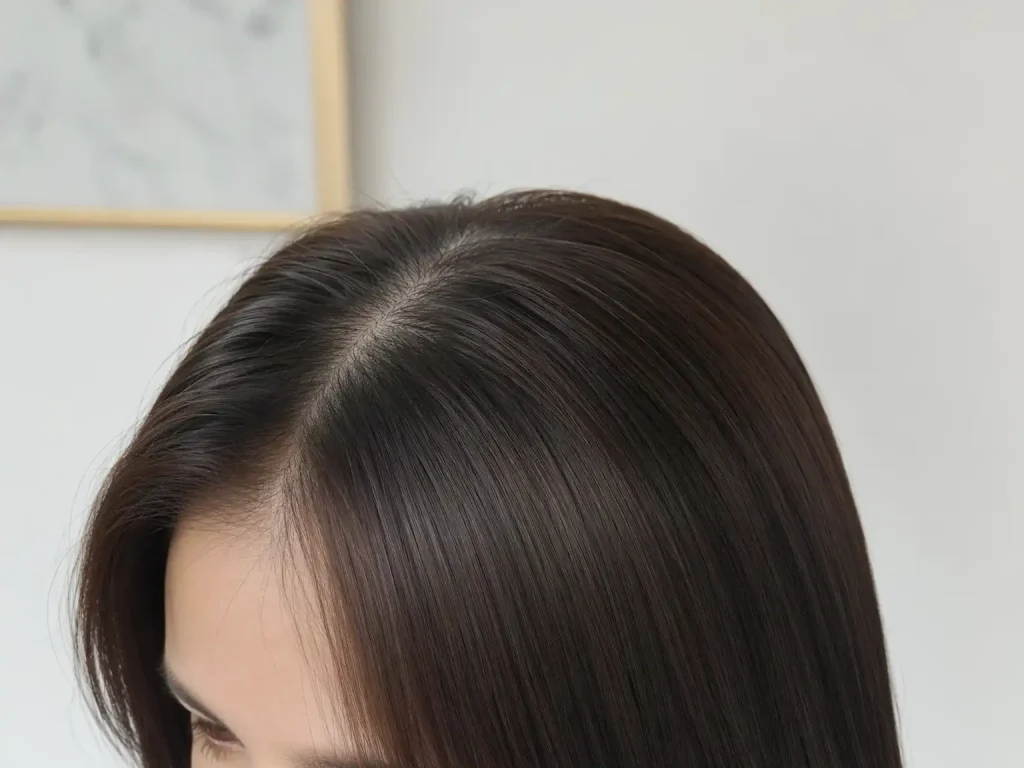
Hair porosity can influence how hair interacts with moisture and responds to different product formats. Learn how private label hair care brands can use porosity insights to develop more targeted products.
Hair porosity describes how the hair fiber absorbs and interacts with water and other substances. For hair care brands, however, porosity is more than a consumer hair quiz result. It can provide useful insight when deciding how products should be formulated, positioned, and developed for different hair needs.
Hair porosity is influenced by the structure and condition of the hair fiber. Chemical treatments, heat, UV exposure, and other forms of damage can alter the porous structure of hair. Research has shown that bleaching can substantially change hair porosity, while UV exposure can further increase porosity in damaged hair.
For private label brands, understanding this distinction can help turn a broad product concept such as “hydrating hair care” or “repair treatment” into a more specific product strategy.
What Is Hair Porosity?
Hair porosity refers to the hair fiber’s ability to absorb and interact with water and other substances.
The hair shaft has several structural layers, with the cuticle forming the outer protective layer around the cortex. The cuticle consists of overlapping cells, while the cortex makes up most of the hair fiber and contributes significantly to its mechanical properties.
When the hair structure is altered or damaged, its interaction with water can also change. Scientific research has demonstrated measurable differences in pore volume, surface area, and water-related behavior between healthier and damaged hair fibers.
This is why porosity can be useful as a product-development concept: the way hair interacts with moisture can influence what consumers expect from a hair care product.
The Three Common Hair Porosity Categories
In consumer hair care, porosity is commonly discussed as:
- low porosity
- medium porosity
- high porosity
These categories are useful for explaining differences in hair behavior, but they should not be treated as rigid scientific classifications. Hair porosity exists along a spectrum, and the condition of an individual hair fiber can change over time.
Low Porosity Hair
Low-porosity hair is generally described as hair that has greater resistance to water and product penetration.
From a product-development perspective, the challenge is not simply to make the formula “more moisturizing.” A product that is too heavy or leaves excessive residue may not deliver the lightweight feel consumers expect.
For brands targeting this customer group, formulation direction may therefore emphasize:
- Lightweight conditioning
- Easier spreadability
- Manageability without excessive buildup
- Moisture support without a heavy after-feel
- Products designed for regular use
This can influence the choice of product format as much as the ingredient selection. A lightweight leave-in spray, conditioner, or fluid treatment may communicate a very different experience from a rich butter or intensive mask.
Medium Porosity Hair
Medium-porosity hair is often considered easier to manage because it can absorb and retain moisture without the same extremes associated with very low or highly porous hair.
For product development, this creates flexibility.
A brand may be able to develop balanced formulas that combine conditioning, moisture, softness, manageability, and protection without needing an extremely lightweight or highly intensive positioning.
This is one reason broad “daily care” products can remain commercially useful. They can serve a wider customer base while allowing a brand to build more specialized products around specific concerns.
High Porosity Hair
Highly porous hair generally interacts with water more readily and may have greater difficulty maintaining moisture.
This condition can be associated with damaged hair, including hair affected by bleaching and other chemical or environmental stressors. Research has demonstrated that cosmetic treatments can alter the porous structure of hair, and studies of bleached hair have shown increased porosity compared with untreated hair.
For product development, this creates an opportunity for more intensive conditioning and damage-care concepts.
Depending on the product objective, brands may consider:
- Richer conditioning systems
- Repair-focused treatments
- Leave-in products
- Hair masks
- Oils or lipid-focused care
- Products designed to improve smoothness and manageability
The key is to develop around the actual customer problem rather than simply labeling a product “for high porosity hair.”
Why Hair Porosity Matters to Private Label Product Development
For a private label brand, hair porosity can help answer a more important question:
Who is this product actually designed to help?
Consider two products both described as “hydrating.”
The first may be designed as a lightweight daily conditioner for hair that feels easily weighed down.
The second may be an intensive mask for chemically processed hair that struggles with dryness and moisture retention.
Both products can legitimately be described as hydrating, but they solve different problems.
This is where porosity becomes useful for product positioning.
Instead of starting with:
“Which ingredients should we put into this product?”
a brand can start with:
“What type of hair behavior are we trying to address?”
That shift can make product development more focused.
Porosity Should Not Be Treated as a Standalone Hair Classification
One of the most important considerations for brands is that porosity does not tell the entire story.
Hair thickness, curl pattern, chemical history, mechanical damage, environmental exposure, and existing product buildup can all influence how hair behaves.
Research reviewing global hair-fiber characteristics has also found substantial variation in hair structure and properties, meaning that simple classification systems cannot fully describe the diversity of real-world hair.
This matters when developing private label products.
A formula designed only around the label “high porosity hair” may be too broad to define a commercially useful product.
A stronger product brief might instead describe a specific customer profile:
Bleached, dry, frizz-prone hair that needs intensive conditioning and improved manageability.
That gives the formulation and product positioning teams a much clearer development objective.
How Porosity Can Influence Product Format
Porosity can also influence which product format makes sense for a particular product concept.
For example, a brand targeting highly porous, chemically treated hair might consider a treatment mask, intensive conditioner, leave-in cream, or repair oil.
A brand targeting customers who dislike heavy products might instead consider a lightweight spray, serum, or fluid conditioner.
The same broad benefit—such as moisture, softness, or manageability—can therefore lead to very different product experiences.
For private label development, this is important because formula and format should support the same customer promise.
A lightweight product positioned as an intensive repair treatment may create a different customer expectation from a rich mask positioned for severely dry, processed hair.
The product should make sense as a complete package: target customer, hair concern, formula, texture, format, packaging, and positioning.
Porosity and Hair Damage Are Closely Connected
Porosity becomes especially relevant when developing products for damaged hair.
Chemical treatments can modify the physical structure of the hair fiber. Studies have demonstrated changes in porosity after bleaching and other cosmetic treatments, while more recent research has examined how heat and chemical processing can affect the cuticle and cortex.
This creates a practical opportunity for brands developing products for:
- Bleached hair
- Colored hair
- Chemically treated hair
- Heat-damaged hair
- Dry and brittle hair
- Frizz-prone hair
Instead of treating “damaged hair” as one broad category, brands can use hair condition and porosity as part of a more precise product-development framework.
For example:
Hair condition → moisture behavior → customer complaint → product format → formulation direction
This is more useful than simply adding “repair” to a product name.
What Does Hair Porosity Mean for Product Formulation?
Porosity does not automatically determine a single ingredient or formula.
There is no universal “low-porosity ingredient list” or “high-porosity formula” that works for every customer.
Formulation should instead consider the intended performance of the finished product.
For example, research on hair porosity has examined how oils can interact with the hair fiber and how certain oil-based approaches may influence porosity-related measurements. One study found that coconut-based hair oil reduced an increase in hair porosity associated with surfactant exposure.
This illustrates an important point for brands: formulation decisions should be connected to the desired hair performance, not simply to a trend-based ingredient list.
The appropriate combination of conditioning agents, oils, polymers, proteins, humectants, surfactants, and other components depends on the product objective and testing results.
How Brands Can Use Porosity in Product Positioning
Hair porosity can be used in different ways depending on the brand strategy.
A specialized brand may build an entire collection around different hair conditions.
For example:
Low-porosity focused care
Lightweight cleansing + lightweight conditioning + buildup-conscious styling
High-porosity / damaged-hair care
Repair treatment + intensive mask + leave-in care + oil
A broader hair care brand may not need to mention “porosity” prominently at all.
Instead, it can translate the underlying need into language customers already understand:
- Lightweight hydration
- Intensive moisture
- Damage repair
- Color-treated hair care
- Frizz control
- Curl moisture
- Heat protection
- Strengthening care
This can make the product easier to understand while still using porosity as part of the product-development thinking behind the formula.
Should a Private Label Brand Launch Products Specifically for Hair Porosity?
Not necessarily.
Porosity can be useful for product development, but it does not automatically need to become the main marketing message.
For a new brand, creating separate low-, medium-, and high-porosity products may add unnecessary complexity if customers do not understand the distinction or if the brand does not yet have enough demand to support multiple SKUs.
A more practical approach may be to identify a clearly recognized customer problem and use porosity as one of the technical considerations behind the formula.
For example, instead of launching:
“High Porosity Hair Conditioner”
a brand could develop:
Intensive Repair Conditioner for Bleached & Damaged Hair
The second positioning communicates the customer problem more directly while allowing the formulation strategy to account for the characteristics of highly porous, damaged hair.
What This Means for Private Label Hair Care Brands
Hair porosity is useful because it helps connect hair science with product strategy.
It can help brands think more carefully about why a customer experiences dryness, frizz, difficulty retaining moisture, or a need for intensive conditioning.
But it should not replace broader product-development considerations.
A successful private label product still needs a clear target customer, defined product purpose, appropriate formula, suitable texture and format, realistic claims, effective packaging, and a clear position within the overall product line.
For manufacturers, this means the development conversation should go beyond:
“Do you have a hair mask?”
A more useful question is:
“What type of hair is the product intended for, what problem should it address, and what experience should the customer have after using it?”
That information can help guide formula selection and product development much more effectively.
Turning Hair Porosity Insights Into a Product Concept
For brands considering a new hair care product, hair porosity can be one part of a broader development framework:
Customer → Hair Condition → Main Problem → Desired Result → Product Format → Formula → Positioning
This approach gives a manufacturer a clearer starting point and helps prevent products from being developed around ingredients alone.
Whether the final concept is a lightweight conditioner, intensive repair mask, leave-in treatment, hair oil, scalp product, or another format, the goal is the same: match the formulation to a clearly defined customer need.
PRO-TECHS works with a broad range of private label hair care formulations, allowing brands to develop products around different hair types, conditions, product formats, and market needs rather than being limited to a small fixed product catalog.
Explore Hair Care Formulas for Your Brand
Looking for a formula for a specific hair type or customer concern? Explore our range of private label hair care formulations and find options that fit your product concept and target market.
Explore Formulas | Contact Us