

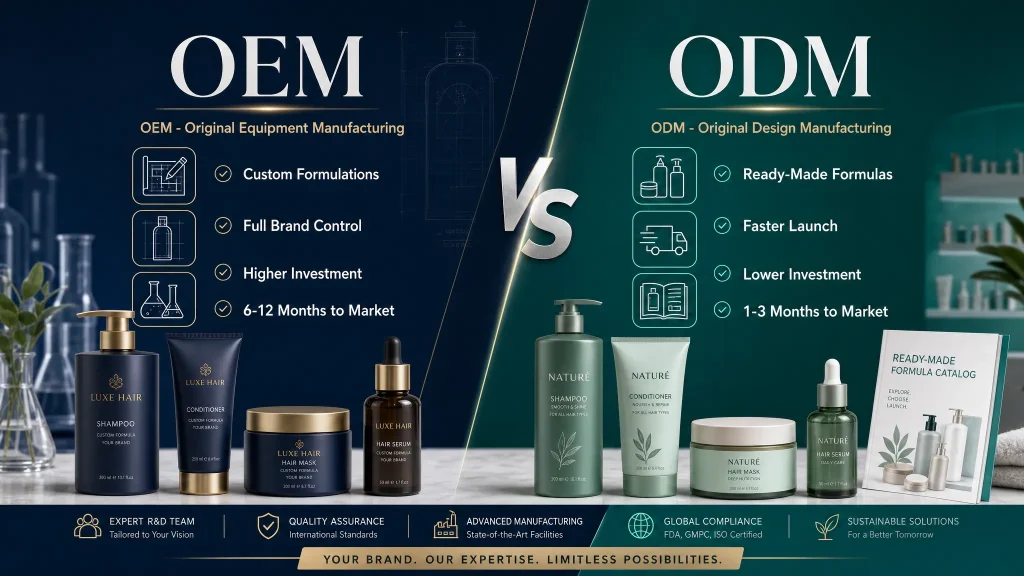
In the professional hair care industry, especially for private label brands, OEM and ODM are two core manufacturing models that determine how your products are developed, customized, and brought to market.
If you are planning to launch a shampoo, keratin treatment, conditioner, or full hair care line, understanding the difference between OEM and ODM is essential for making the right strategic decision.
This guide breaks down both models in a practical, business-focused way so you can choose the best path for your brand.
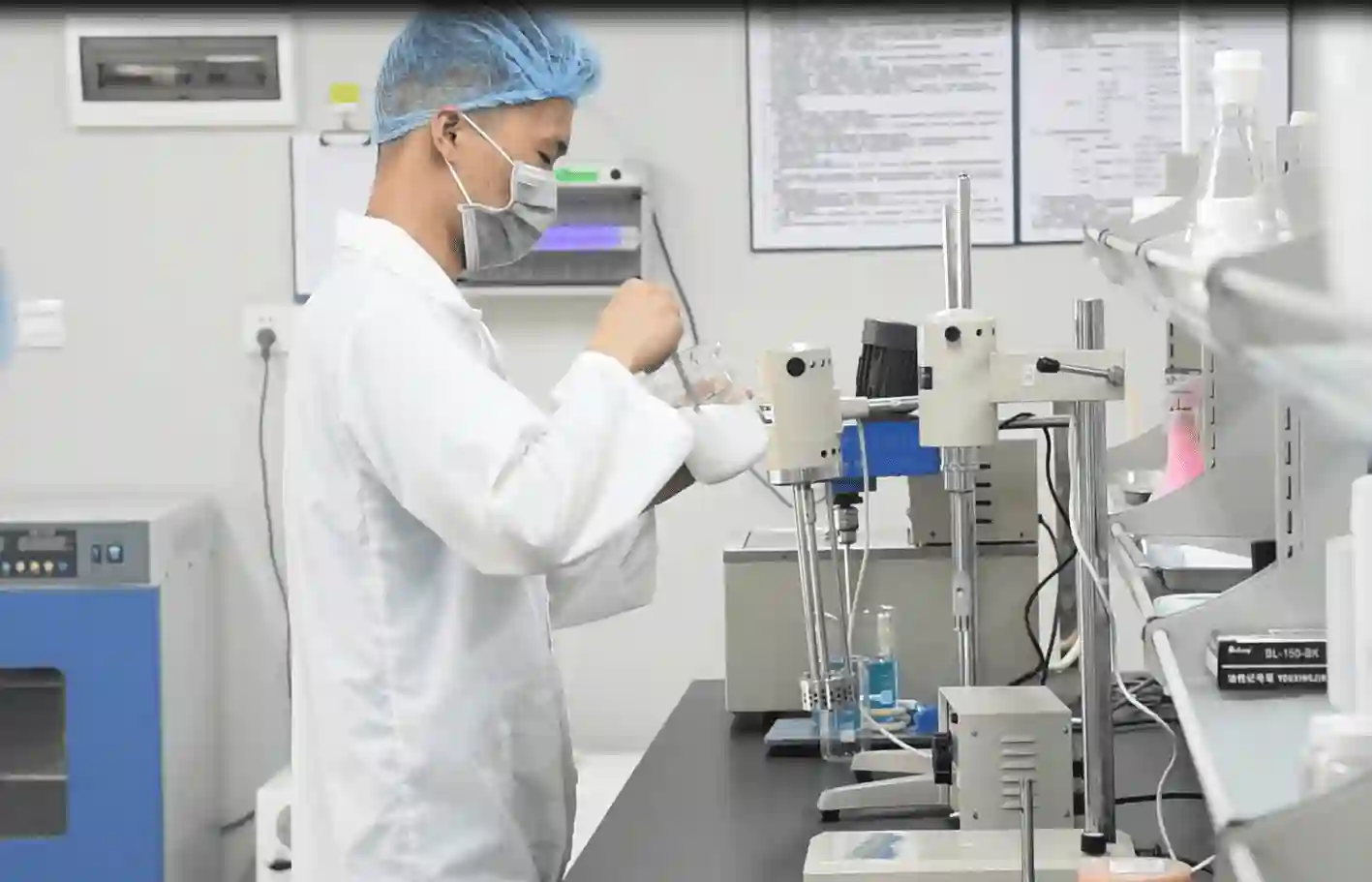
OEM (Original Equipment Manufacturer) refers to a manufacturing model where the product is developed based on your specifications or heavily customized formulation.
In hair care, OEM usually means:
Key Characteristics of OEM:
When OEM Makes Sense:
OEM is ideal if you want to build a unique, long-term brand identity.
Typical use cases:
OEM in Practice:
A brand works with a manufacturer to develop a formaldehyde-free keratin treatment with a specific smoothing performance level, fragrance profile, and processing time, then scales it globally under its own label.

ODM (Original Design Manufacturer) refers to a model where the manufacturer already has pre-developed, tested formulations that you can brand as your own.
In this case:
Key Characteristics of ODM:
When ODM Makes Sense:
ODM is ideal for brands that want to enter the market quickly and test demand.
Typical use cases:
ODM in Practice:
A brand selects a ready-made sulfate-free shampoo and conditioner system, adds its own branding and packaging, and launches within weeks instead of months.
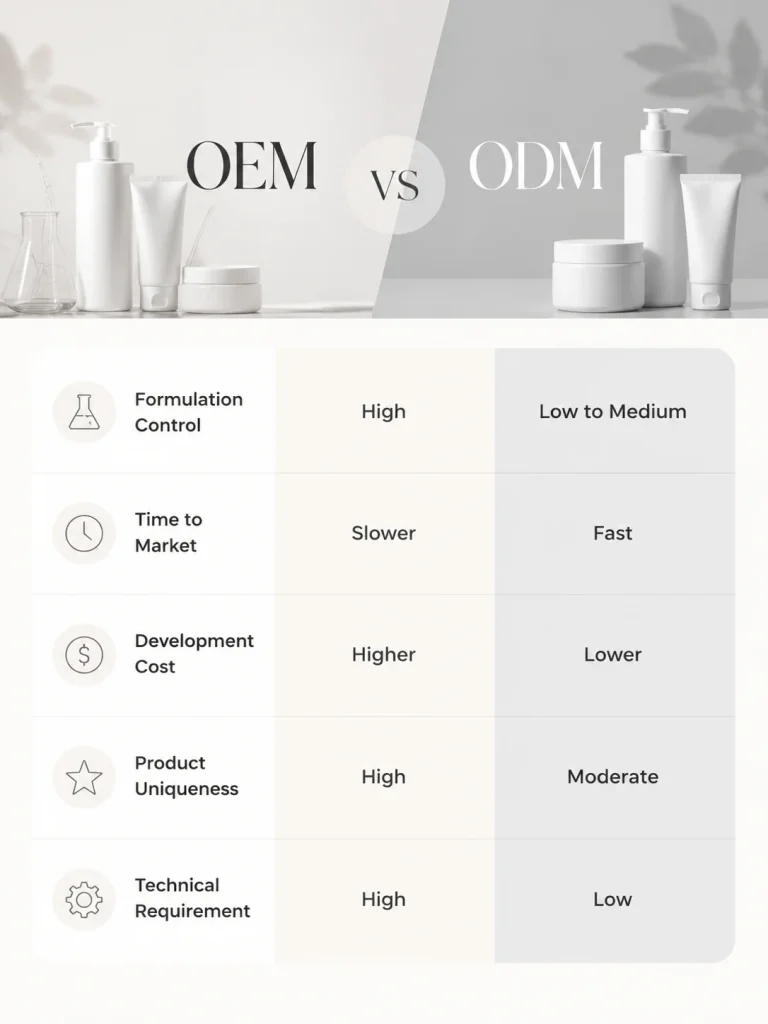
Understanding the trade-off between OEM and ODM helps you align manufacturing strategy with business goals.
1. Product Control
2. Speed to Market
3. Cost Structure
4. Differentiation
The right choice depends on your stage, budget, and long-term positioning.
ODM is the most efficient entry point.
It allows you to:
This is ideal for:
OEM becomes important when you need product uniqueness.
It is suitable when:
However, OEM requires:
Many successful hair care brands follow a phased approach:
This approach reduces risk while building long-term competitiveness.
1. Starting with OEM too early
Most new brands don’t need full custom formulation at launch.
2. Ignoring supplier capability
Not all manufacturers can support both ODM and OEM effectively.
👉 Click to learn about PRO-TECHS’ manufacturing and R&D capabilities in the hair care industry

OEM and ODM represent two fundamentally different strategies for building a hair care brand.
Choosing the right model depends on your business stage and strategic goals. For most new brands, starting with ODM and gradually transitioning into OEM offers the most balanced and scalable path.
If you are planning to launch a private label hair care line, selecting the right manufacturing model is the first critical decision that will define your brand’s future growth potential.