



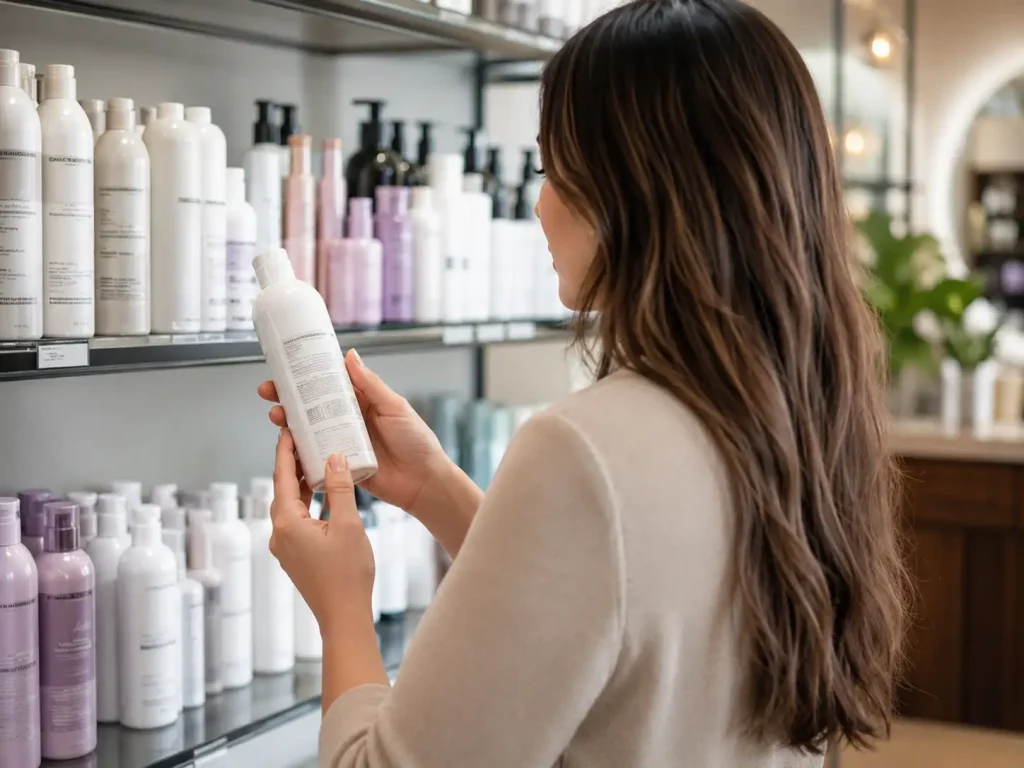
Today’s salon clients are more informed than ever. Before booking a treatment or purchasing a product, many consumers actively search for ingredient lists, safety claims, and formulation details online.
Searches like:
continue to grow because clients want clarity about what is being applied to their hair and scalp.
For salons, ingredient transparency is no longer just a marketing advantage. It directly affects:
Salons that clearly communicate product ingredients and formulation standards are increasingly viewed as more professional, trustworthy, and premium.
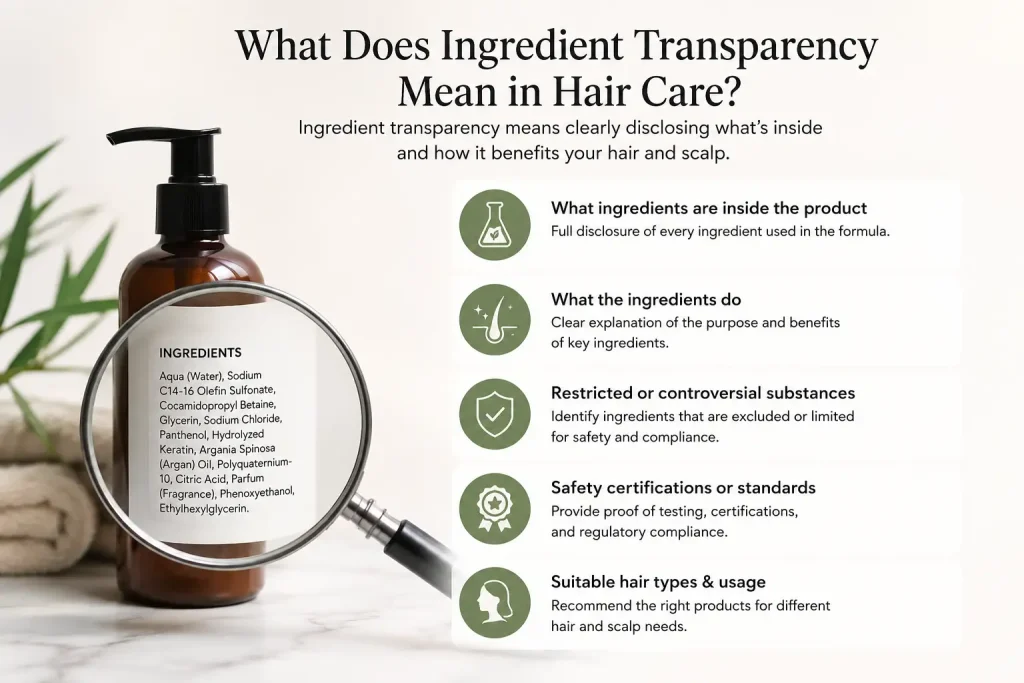
Ingredient transparency means clearly disclosing:
In professional salon environments, transparency becomes especially important for treatments such as:
Clients are no longer satisfied with vague claims like “natural” or “organic” without proof or detailed ingredient information.
Three shifts are happening in the hair care market:
| Shift | What it means for your salon |
|---|---|
| Social media education | TikTok and Instagram have made “clean beauty” mainstream. Clients arrive pre-informed. |
| Health anxiety | More people worry about long-term exposure to synthetic chemicals — especially on their scalp and skin. |
| Pregnancy & sensitivity | Expecting clients and those with eczema or allergies actively avoid certain ingredients. |
The salon that understands this wins trust — and repeat business.
Clean Beauty Is Influencing Salon Purchasing Decisions
Consumers increasingly search for:
This shift is pushing salons to evaluate not only product performance, but also ingredient safety and brand transparency.
Professional hair care brands that provide complete ingredient documentation often gain stronger distributor and salon partnerships.
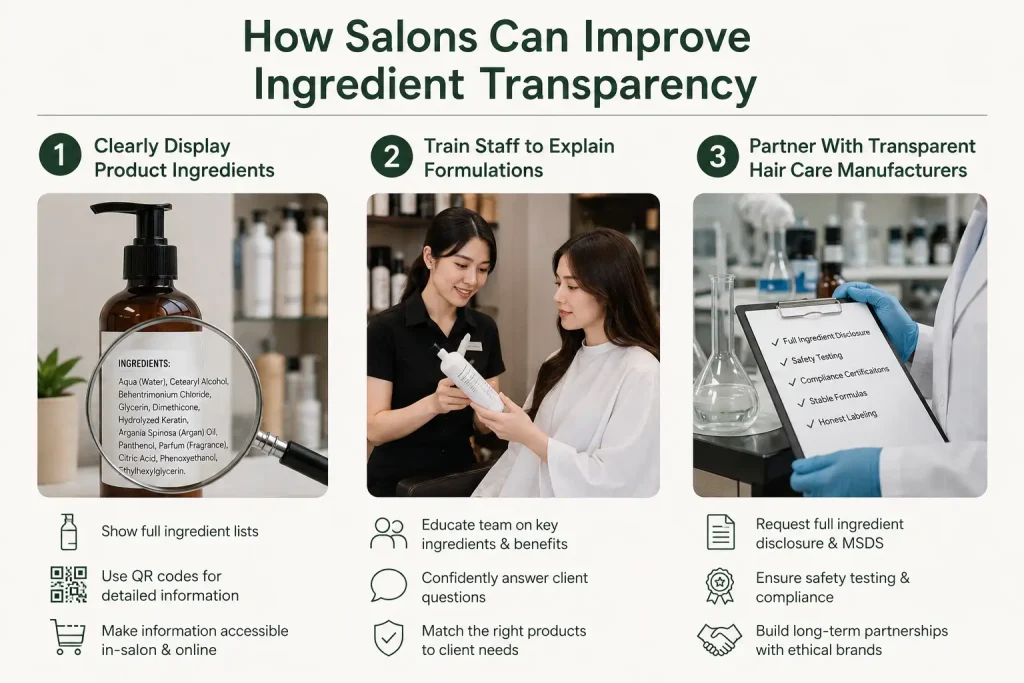
Avoid hiding ingredient lists.
Salons should make ingredients accessible through:
Clients appreciate brands that communicate openly instead of using vague marketing language.
Front desk teams and stylists should understand:
For example, if a client asks whether a keratin treatment is formaldehyde free, the salon team should provide a clear and confident explanation rather than a generic response.
This directly impacts treatment conversion rates.
Not all suppliers provide the same level of formulation transparency.
Professional salons should work with manufacturers that offer:
This becomes even more important for salons developing private label hair care products.
Choose PRO-TECHS, we make is:
For salons launching their own brand, ingredient transparency is critical for long-term credibility.
Clients increasingly expect private label products to provide:
Private label hair care brands that rely only on packaging aesthetics without formulation transparency often struggle to build repeat customer trust.
Many salon clients specifically search for products that are:
However, claims should always be supported by accurate formulation data and compliant labeling practices.
Overstated marketing claims can damage salon credibility.
Clients are more likely to purchase retail products when they understand:
Simple ingredient education can significantly improve:
Transparency helps transform salon retail from “sales pressure” into professional recommendation.
The salon industry is moving toward:
Brands and salons that prioritize ingredient transparency position themselves as more professional, trustworthy, and future-focused.
In competitive markets, transparency is no longer optional. It is becoming a core expectation from modern salon clients.

Ingredient transparency helps salons build stronger client relationships, reduce consultation friction, and increase confidence in both services and retail products.
Whether offering keratin treatments, scalp care systems, or private label hair care products, salons that openly communicate ingredients and formulation standards are more likely to earn long-term client trust.
As consumers continue searching for safer and more transparent hair care solutions, salons that adapt early will gain a significant competitive advantage.
Ready to switch to fully transparent, salon‑safe keratin products?
Explore our ingredient philosophy →