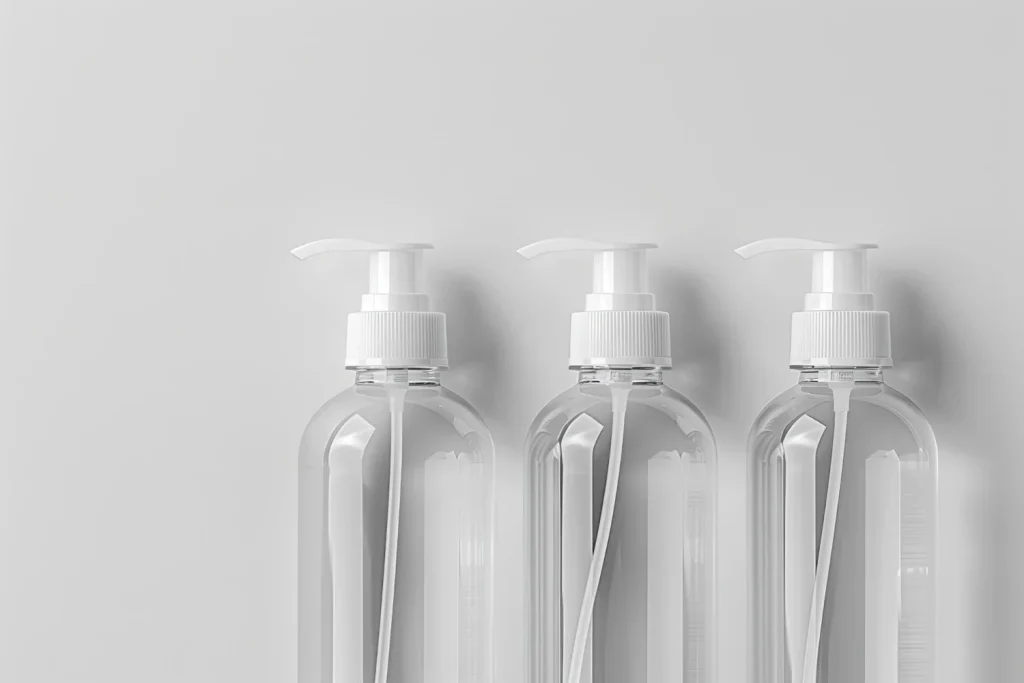
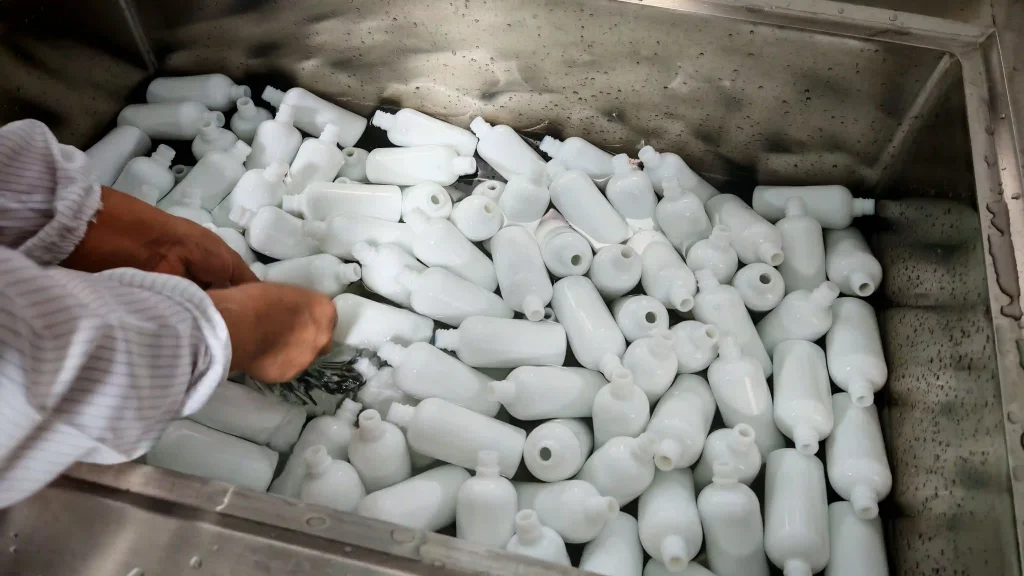
Plastic bottles can impact hair care formulas through absorption, leaching, and oxidation, leading to instability, reduced performance, and compromised product quality.
In professional hair care manufacturing, formulation stability is often discussed in terms of pH, preservatives, and active systems.
But one of the most underestimated failure points is:
packaging compatibility—especially with low-cost plastic bottles
A stable formula in the lab can become unstable, ineffective, or even unsafe once placed in the wrong container.
Packaging Is Part of the Formula System A modern cosmetic product is not just “ingredients in a bottle.”
It is a closed chemical system made of:
formulation matrix (actives, solvents, emulsifiers)
preservatives (microbial control system)
packaging polymer (HDPE, PET, PP, etc.)
When these interact incorrectly, the bottle is no longer inert—it becomes an active variable.
What Actually Goes Wrong in Cheap Plastic Packaging
Chemical migration (ingredient absorption into plastic) Low-grade plastics can:
absorb essential oils and fragrance compounds
extract plasticizers into the formula
gradually alter concentration of active ingredients
Result:
weaker performance over time
unstable scent profile
reduced smoothing or conditioning effect
Plastic leaching (packaging contaminates the formula) Certain plastics may release:
plasticizers
oligomers
stabilizer residues
This is more likely under:
heat exposure (shipping or storage)
high solvent formulations
long shelf-life products
Result:
odor changes
unexpected texture shifts
regulatory risk in premium markets
Structural instability of emulsions Hair care products often rely on:
emulsions (oil-in-water systems)
cationic conditioning systems
Poor packaging can disrupt:
emulsion stability
viscosity balance
phase separation resistance
Result:
watery separation
clumping or sediment
“broken” product appearance
Air + oxygen permeability issues Cheap plastic bottles often have:
higher oxygen transmission rates
poor sealing consistency
Result:
oxidation of oils and botanical extracts
color darkening
reduced antioxidant performance
Why This Problem Is Worse in Professional Hair Care Professional-grade products are more sensitive because they contain:
higher active concentrations
complex cationic systems
heat-activated ingredients (keratin systems, smoothing polymers)
fragrance-heavy formulations
These systems are chemically “reactive by design,” meaning:
they are more likely to interact with packaging polymers than basic cosmetic emulsions
Common High-Risk Packaging Materials Low-quality HDPE (common in budget packaging)
inconsistent polymer density
higher permeability
weak barrier against oils/fragrance
Recycled plastics without proper purification
unpredictable residual compounds
inconsistent chemical resistance
Thin PET bottles
better clarity, but weaker chemical resistance for active formulas
What Professional-Grade Packaging Actually Uses High-stability systems typically rely on:
High-barrier plastics
multilayer PET
fluorinated HDPE (for chemical resistance)
Cationic-compatible materials
PP (polypropylene) for conditioner-based formulas
Airless systems
reduce oxidation
minimize contamination
stabilize viscosity over time
These choices are not cosmetic—they are chemical engineering decisions.
Stability Testing Is Not Optional (It Is Packaging Validation) Professional manufacturers must test:
accelerated aging (40–45°C conditions)
freeze–thaw cycles
long-term storage compatibility
packaging absorption and leaching behavior
This is part of modern Cosmetic Chemistry quality control standards.
Real-World Failure Signs Brands Often Miss If packaging incompatibility is occurring, you may see:
product becomes thinner over time
scent fades faster than expected
color drifts or darkens
inconsistent pump output
“separated but still looks usable” texture
These are not formulation failures alone—they are often packaging-driven degradation.
Key Insight for Brands (Most Important Point) A high-performance formula can be downgraded by poor packaging.
But a mediocre formula cannot be “saved” by premium packaging either.
The product only performs at the level of the weakest component in the system.
For scaling brands, packaging is not an aesthetic decision—it is a stability infrastructure decision.
Conclusion Packaging compatibility is one of the most overlooked technical risks in hair care manufacturing.
Cheap plastic bottles do not just “hold” the product—they actively influence:
chemical stability
sensory quality
performance consistency
shelf-life reliability
For professional-grade keratin, treatment, and salon products, packaging should be treated as part of the formulation itself—not an afterthought.
Build Your Hair Care Brand with PRO-TECHS Private Label Stable formulations, professional packaging, and salon-grade performance designed for scalable hair care brands.