
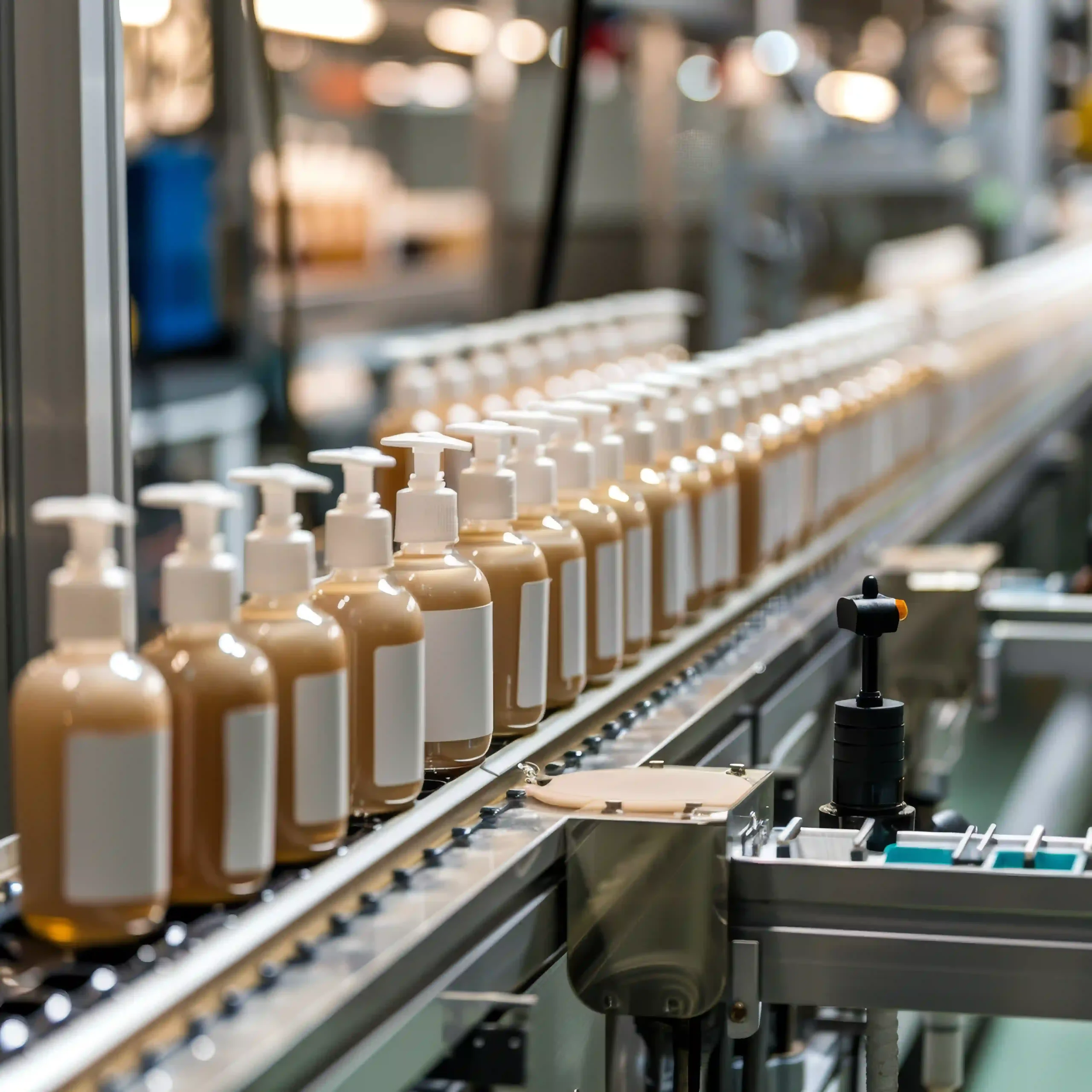

Emulsification directly affects the stability, texture, viscosity, appearance, and application performance of many hair care products. If the emulsification process is not properly controlled, a conditioner or hair mask can separate, lose viscosity, develop an inconsistent texture, or perform differently from the approved sample.
For this reason, emulsification is a critical manufacturing step when developing and scaling conditioners, hair masks, creams, and treatment products. This article explains the key factors manufacturers control during emulsification and how the process affects the final quality and consistency of a commercial hair care product.
For a finished hair care product, emulsification is not simply about combining oil and water. It determines how the internal structure of the formula is formed—and that structure directly influences what customers see and experience.
Poorly controlled emulsification can lead to problems such as:
A product may look acceptable immediately after production but still develop instability weeks or months later. This is why emulsification needs to be evaluated not only during formulation development but also during scale-up, production, and stability testing.
For manufacturers, the objective is to establish an emulsification process that produces the same internal formula structure consistently—not simply to achieve the desired appearance in one laboratory batch.
Conditioners and hair masks are particularly dependent on controlled emulsification because their rich textures are created through interactions between water, oils, conditioning agents, fatty alcohols, emulsifiers, and other structuring ingredients.
A change in emulsification conditions can therefore change the finished product even when the ingredient percentages remain identical.
For example, differences in:
can influence the final viscosity and sensory profile.
This is why a formula that performs well in a small laboratory batch cannot automatically be assumed to behave identically in a 500 kg or 1,000 kg production batch.
The manufacturing process has to be engineered alongside the formula.


The most visible problem is often separation, but instability can appear in less obvious ways.
A formula may remain visually uniform while gradually losing viscosity during storage. Another may become excessively thick after cooling or develop a different texture after exposure to elevated temperatures.
These changes can affect the customer’s experience even when the original formula was technically correct.
For a commercial product, consistency must therefore be considered across three stages:
Laboratory sample → Production batch → Finished product during storage
A professional manufacturing process connects these three stages through controlled formulation parameters and testing.
Professional emulsification requires control over both the formula and the manufacturing process.
Key parameters include:
The ratio and characteristics of the water and oil phases influence the structure of the final emulsion.
The emulsifier must be compatible with the oil phase, conditioning system, and intended product structure.
Temperature affects the melting and incorporation of fatty alcohols, oils, emulsifiers, and other heat-sensitive materials.
Mechanical energy influences droplet dispersion and the resulting emulsion structure. However, higher shear is not automatically better; excessive shear can negatively affect certain polymers or structured systems.
For many conditioners and masks, viscosity develops significantly during cooling. Cooling conditions therefore need to be controlled rather than treated as an incidental production step.
The order in which ingredients enter the vessel can influence dispersion, hydration, emulsification, and final viscosity.
These parameters are established during R&D and then translated into production-scale manufacturing instructions.
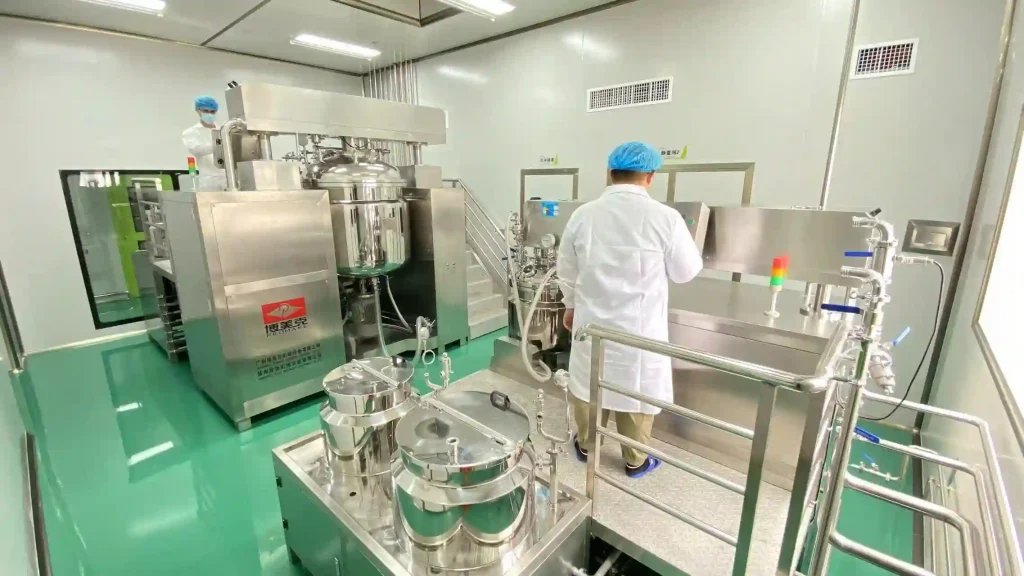
One of the most important challenges in hair care manufacturing is reproducing a laboratory formula at commercial scale.
A 5 kg laboratory batch and a 1,000 kg production batch do not have the same:
Simply multiplying the formula by 200 does not guarantee the same result.
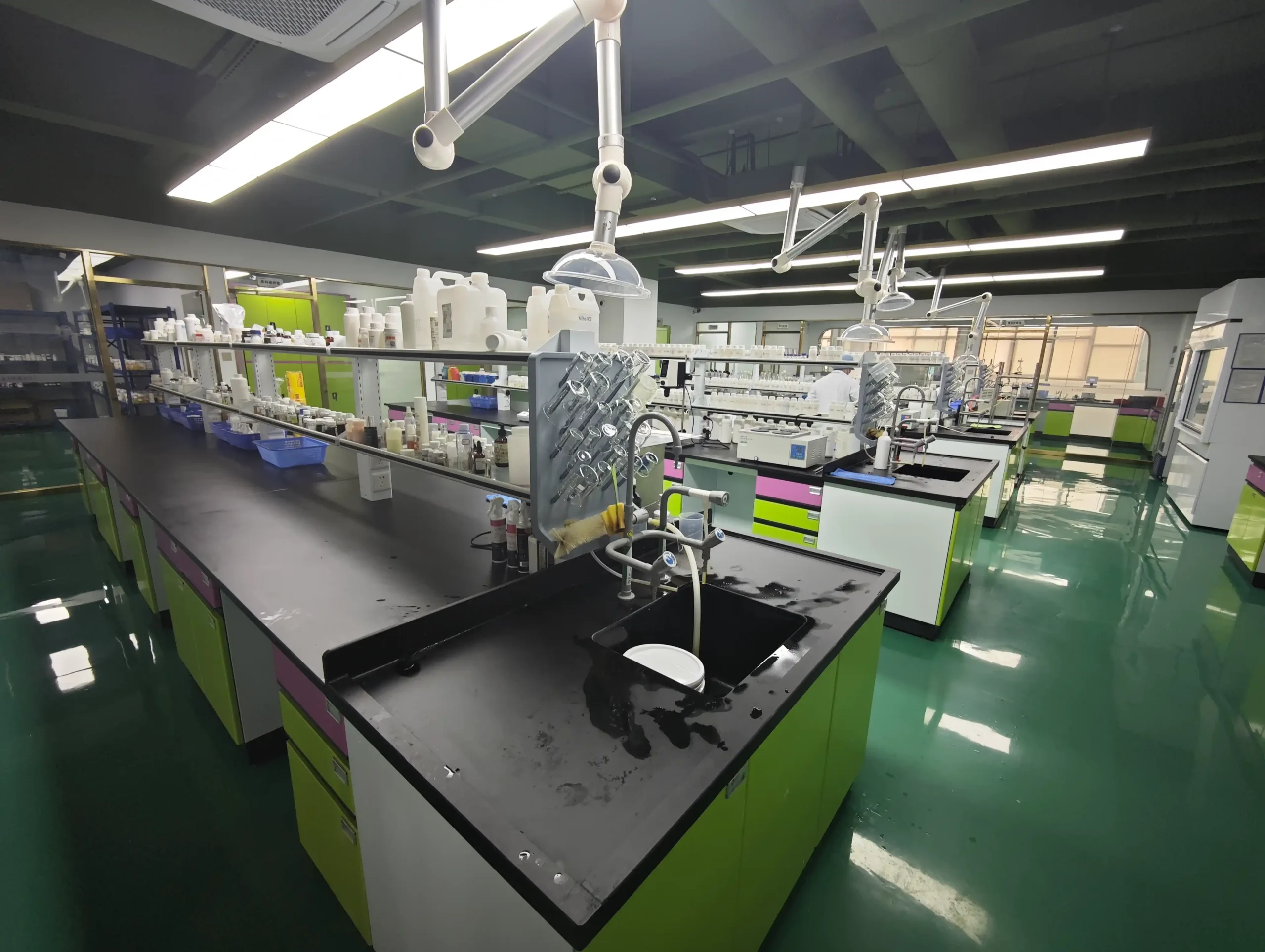
During scale-up, manufacturers must determine which laboratory conditions can be reproduced and which parameters need to be recalculated for production equipment. This requires integrated R&D and Manufacturing capabilities rather than simply increasing batch size.
This is where R&D and manufacturing capabilities become closely connected. A manufacturer needs to understand not only what the formula contains, but also how the formula behaves inside the production system.
A successful emulsification process should produce a formula that remains stable after production.
Manufacturers may monitor:
Accelerated stability testing can also expose the formula to elevated temperatures to identify potential instability more quickly.
For example, a 12-week stability study at 45°C can be used as part of an accelerated evaluation, depending on the product and testing protocol.
If viscosity changes significantly or separation occurs during testing, the R&D team may need to reassess the emulsifier system, processing conditions, or formula structure.
This makes stability testing an important validation step rather than simply a final quality check.
Click to read: What Is Stability Testing for Hair Care Products?
When a brand approves a conditioner or hair mask sample, the real manufacturing challenge is reproducing that same product consistently at commercial scale.
A reliable manufacturing partner should therefore be able to control the complete process from:
Formula Development → Emulsification → Scale-Up → Production → Stability Testing
This reduces the risk of receiving a commercial batch that looks or feels different from the approved sample.
The stronger the manufacturer’s R&D and production integration, the easier it is to identify the cause when a formula behaves differently during scale-up or storage.
Emulsification has a direct impact on the commercial quality of a hair care product. It affects whether a conditioner or mask maintains its intended viscosity, texture, appearance, stability, and application performance throughout its shelf life.
The key challenge is not simply creating a stable emulsion in the laboratory. It is developing a process that can reproduce the same formula structure consistently at commercial scale.
For manufacturers, this requires control over formulation, temperature, shear, mixing, cooling, scale-up, and stability testing—connecting laboratory R&D with controlled production.