






Hair care product viscosity is carefully engineered—not simply made “thicker” or “thinner.” Professional manufacturers adjust viscosity by controlling the formula structure, ingredient ratios, processing conditions, pH, temperature, and production parameters. This article explains how these factors work together to create consistent shampoo, conditioner, mask, and treatment textures from laboratory development to large-scale production.
Viscosity describes a product’s resistance to flow. In simple terms, it determines whether a hair care product feels thin and fluid, rich and creamy, or thick and dense.
However, viscosity is more than a visual or sensory characteristic. In professional hair care manufacturing, it can influence:
For example, a shampoo that is too thin may be perceived as less concentrated or difficult to control during application. If it is too thick, it may be difficult to pump, fill, or spread through the hair.
The same principle applies to conditioners, masks, and professional treatments. The target viscosity must match the product function, formula system, packaging, and intended user experience.
That is why experienced manufacturers treat viscosity adjustment as a formulation and process-control task rather than a simple final-stage correction.
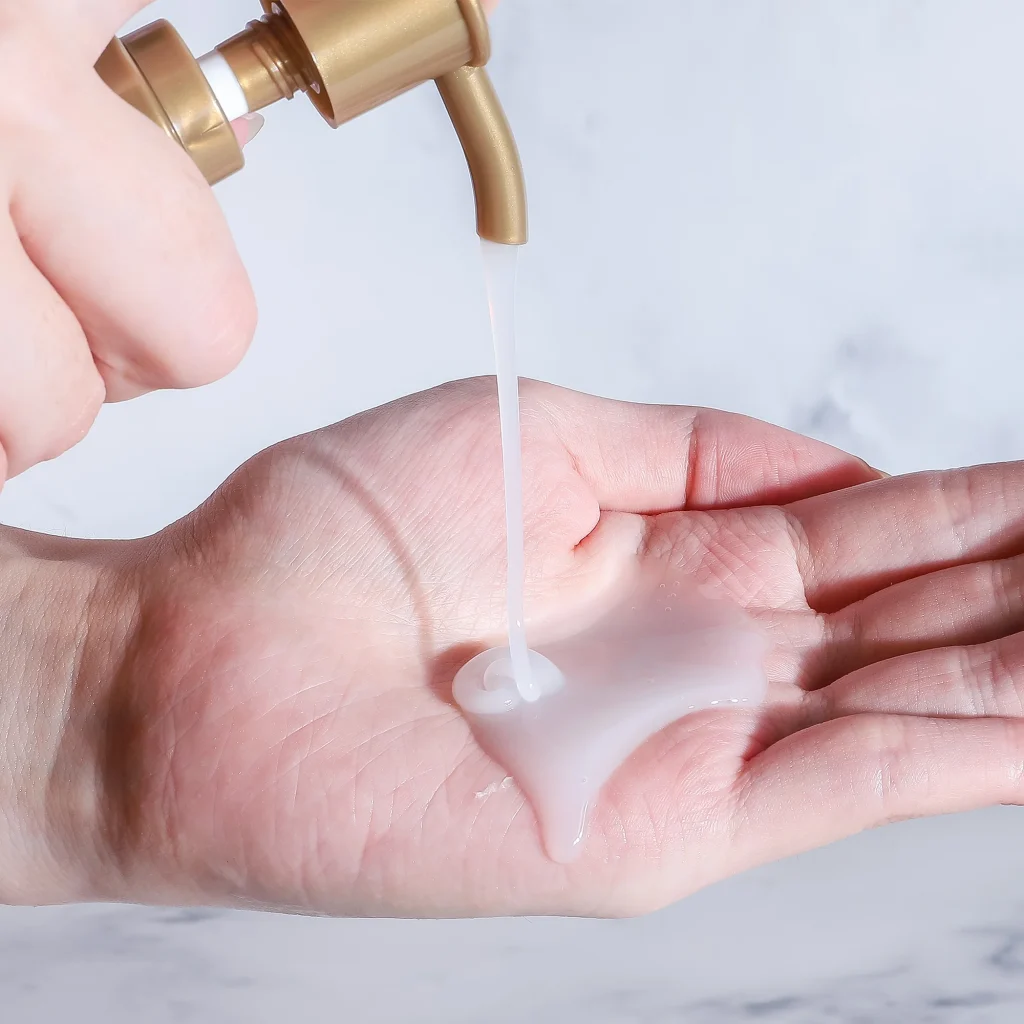
Two products can contain similar ingredients but perform very differently because of their rheological structure.
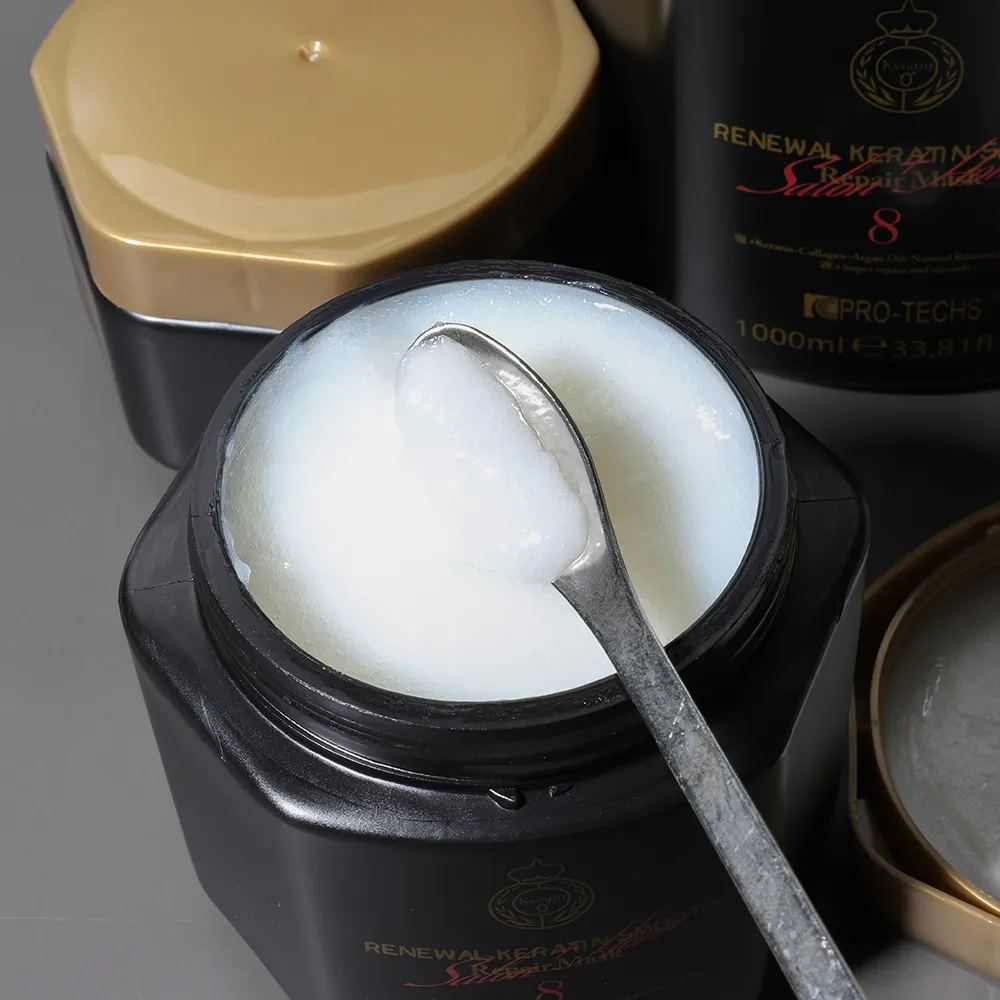
For example, a hair mask may need to remain stable in a jar while still being easy to scoop and spread. A conditioner designed for a pump bottle needs sufficient body but must flow consistently through the dispensing system.
Viscosity also affects how consumers perceive quality.
A product that changes from a smooth cream to a watery texture during storage can immediately create concerns about:
For a hair care brand, viscosity specifications therefore become part of the overall product standard.
Professional manufacturers normally establish a target range rather than relying on a single viscosity number. For example, a formula may be approved within a defined specification range measured under controlled testing conditions. The exact range depends on the product and measurement method.
A viscosity result is only meaningful when the testing conditions are also controlled, including:
Without standardized conditions, two viscosity readings cannot always be compared directly.
The first step is defining what the finished product should feel and perform like.
During product development, the R&D team considers questions such as:
For example, a daily shampoo may require a different flow profile from a professional repair mask.
The target is therefore not simply “high viscosity.” The objective is to create the right rheological behavior for the product.
This is an important distinction. A product can have a high measured viscosity but still feel unsuitable during use if its flow behavior is poorly designed.
The most fundamental way to control viscosity is through the interaction of ingredients.
Depending on the product type, manufacturers may adjust:
The correct solution depends on the formula.
Many shampoos use surfactant systems whose viscosity can change significantly when certain components are adjusted.
A small change in electrolyte concentration, for example, may increase viscosity within a suitable formulation window. However, adding too much can have the opposite effect and reduce viscosity.
This relationship is often described as a viscosity curve rather than a straight line.
For this reason, manufacturers do not simply add more thickening material until the product becomes thicker. The R&D team must identify the optimum concentration for the specific surfactant system.
A change as small as a fraction of a percentage in a formula component can sometimes produce a noticeable viscosity difference, depending on the chemistry of the system.
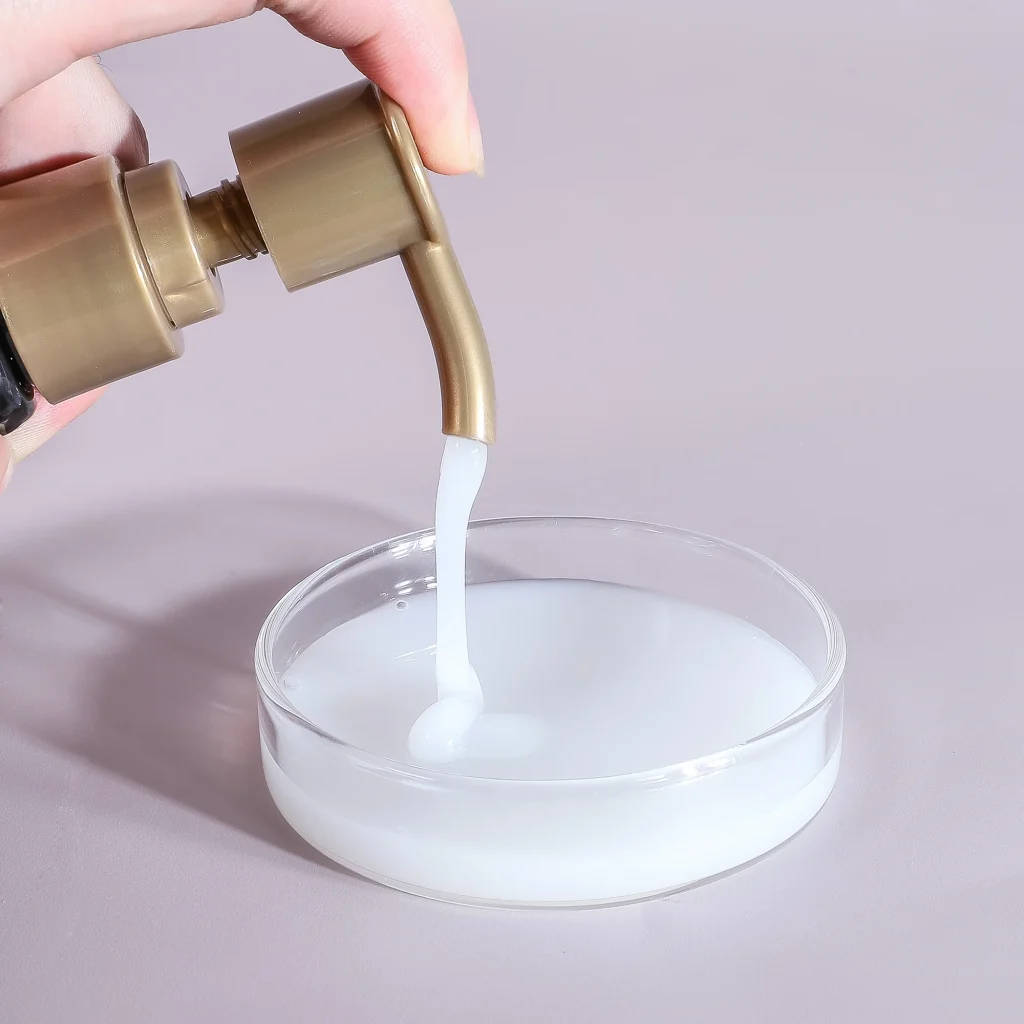
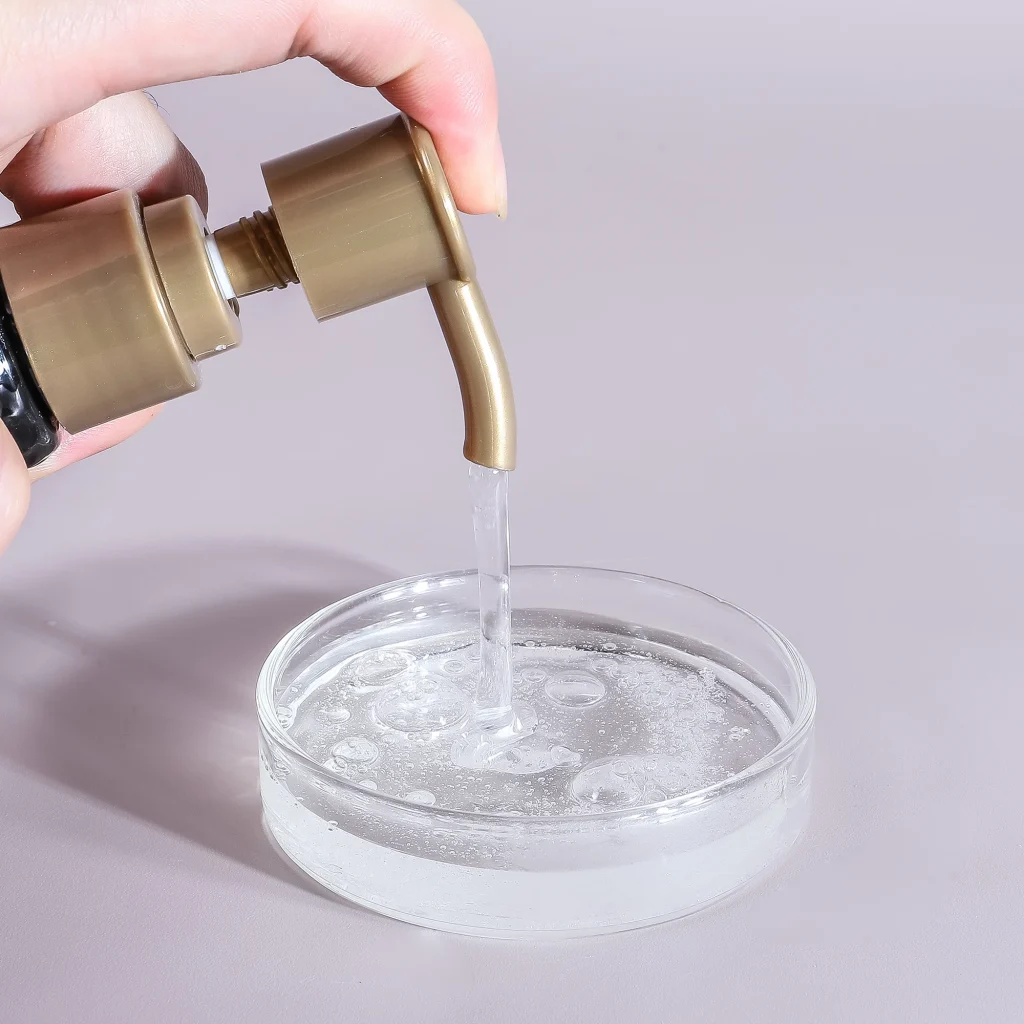
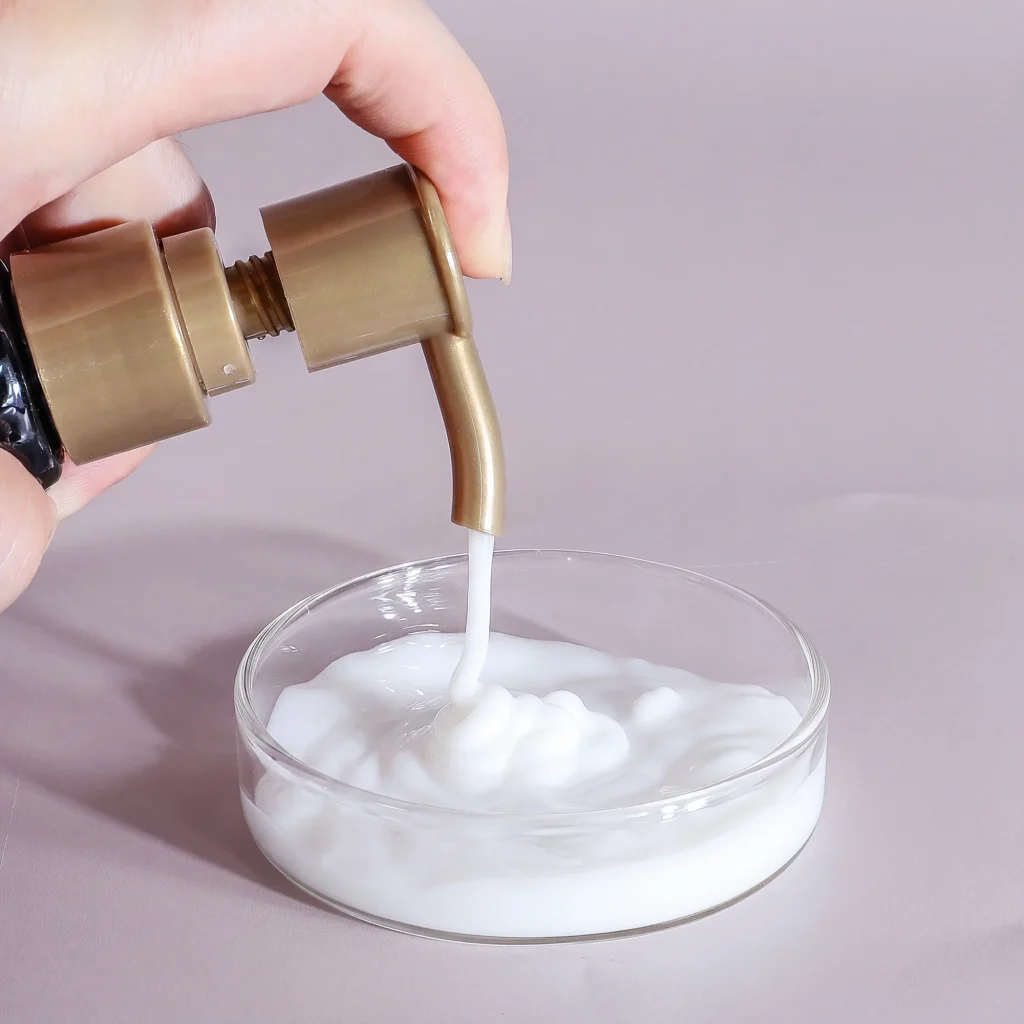
Conditioners and masks are typically more complex structured emulsions.
Their viscosity may be influenced by:
For these products, viscosity is often created by the formation of an internal structural network rather than by one single thickening ingredient.
Changing the ratio of two structuring ingredients may alter:
This is why simply copying a viscosity number from one formula to another does not guarantee the same product experience.
pH is an important but often underestimated factor in viscosity control.
Some thickening polymers and formulation systems respond strongly to pH changes. A product may have the desired texture at one pH level but become significantly thinner or thicker after adjustment.
For example, a manufacturer may need to control the pH within a narrow product specification range to maintain both:
This is particularly important when developing products containing functional ingredients, proteins, acids, or complex conditioning systems.
The correct development process is not:
Instead, manufacturers often need to evaluate pH and viscosity together because changing one parameter can affect the other.
A professional R&D laboratory therefore monitors multiple quality indicators rather than treating viscosity as an isolated measurement.
Hair care products do not have the same viscosity at every temperature.
A product stored at 10°C may behave differently from the same product stored at 25°C or 40°C.
During manufacturing, temperature can affect:
For conditioners and masks, the cooling stage can be especially important.
A product may initially appear thinner when warm and gradually build viscosity as the formula cools and its internal structure develops. If the product is filled too early or measured under inconsistent temperature conditions, the viscosity result may not represent the final equilibrium texture.
This is one reason why professional manufacturers define specific testing conditions.
For example, a batch may be tested only after:
This creates more meaningful and comparable data between batches.
Viscosity is not controlled by ingredients alone. The manufacturing process itself can affect the final result.
Important process parameters include:
Some hair care formulas are sensitive to excessive mechanical shear.
For example, aggressive mixing may change the internal structure of certain thickened or emulsified systems. Insufficient mixing, on the other hand, can result in incomplete dispersion or uneven ingredient distribution.
Manufacturers therefore establish a production process with defined parameters.
A formula developed successfully in a 5 kg laboratory batch cannot always be transferred directly to a 1,000 kg production vessel without adjustment.
This process is known as scale-up.
During scale-up, R&D and production teams must consider factors such as:
This is one of the reasons why an experienced hair care manufacturer can provide significant advantages over a supplier that simply follows a basic formula sheet.
Even when a manufacturer uses the same approved formula, raw material variations can influence the final product.
Natural ingredients and certain functional raw materials may vary between batches because of differences in:
Professional quality control systems therefore monitor incoming raw materials before production.
Manufacturers may check specifications such as:
If a key raw material behaves differently from the standard specification, the production team may need to evaluate whether it can affect the finished product.
This is why consistent viscosity requires more than accurate weighing. It requires raw material control, formula control, and process control.
Professional laboratories commonly use instruments such as digital viscometers to measure product viscosity.
However, the instrument reading alone is not enough.
A reliable viscosity test should define:
For example, if one sample is measured at 25°C and another at a significantly higher temperature, the results may not be directly comparable.
Similarly, some hair care products are non-Newtonian, meaning their apparent viscosity can change depending on the force or shear applied during measurement.
This is particularly relevant for products such as:
Therefore, professional manufacturers create standardized testing procedures for each product category.
The goal is not simply to obtain a high or low number. The goal is to determine whether the batch remains within the approved product specification.
When a production batch falls outside the target range, a professional manufacturer should not make uncontrolled adjustments.
The first step is to investigate the cause.
Potential factors include:
Only after identifying the likely cause should the technical team determine the appropriate adjustment method.
For example, increasing a thickening component may solve the immediate viscosity problem but could negatively affect:
This is why viscosity correction should be based on technical evaluation rather than trial and error.
A good manufacturing system also records adjustments and batch data to support traceability and continuous process improvement.
A product reaching the correct viscosity immediately after production does not guarantee long-term stability.
Manufacturers also need to evaluate whether viscosity changes during storage.
Stability testing may monitor changes in:
Products may be evaluated under different storage conditions, including accelerated temperature conditions.
The purpose is to identify whether the formula remains within its expected quality specifications over time.
For example, a hair mask may initially have excellent texture but gradually become thinner after prolonged heat exposure. Another product may become excessively thick during low-temperature storage.
These results provide valuable information about formula robustness and packaging suitability.
For brands, this means viscosity control should be viewed as part of a larger stability and quality management system.
Brands developing private label or custom hair care products should ask technical questions such as:
These questions can help brands evaluate whether a manufacturer understands formulation science and process control.
A manufacturer should be able to explain not only what viscosity the product has, but also how that viscosity is achieved, measured, controlled, and maintained.
Adjusting hair care product viscosity requires a combination of formulation expertise, controlled processing, laboratory testing, and stability evaluation. Manufacturers must understand how ingredients, pH, temperature, mixing conditions, and raw material variations interact before making technical adjustments.
For brands, consistent texture is one visible sign of a well-controlled manufacturing system. The right hair care manufacturer should be able to translate a desired product feel into measurable specifications—and consistently reproduce that standard from laboratory development to commercial-scale production.
From laboratory formulation and viscosity measurement to stability testing and large-scale production, PRO-TECHS applies controlled processes to help ensure consistent hair care product quality.

A professional hair care product requires precise control from formulation development to final production. See how PRO-TECHS combines laboratory R&D, viscosity evaluation, stability testing, and controlled manufacturing to maintain consistent product quality.